Friday, October 11, 2024

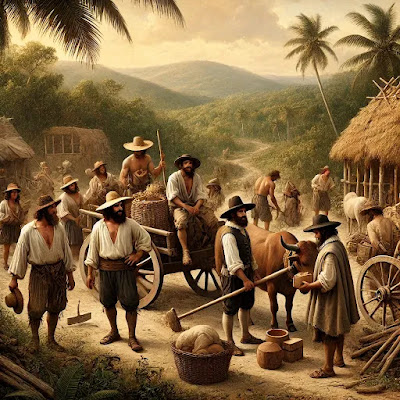
Rethinking the origin of Matanzas: from myth to history

The traditional understanding of how the city of Matanzas got its name is often attributed to a historical event in which Spaniards were supposedly massacred by indigenous people while attempting to cross the Bay of Matanzas. This account is widely accepted, but the document "Matanza de Yucayo: Historia y Mito" by Johanset Orihuela León and Ricardo A. Viera Muñoz (2020) offers a critical analysis of this narrative and presents alternative explanations, suggesting that the name "Matanzas" may not be linked to a simple act of violence, as traditionally thought.

The term "Matanzas," which literally translates to "massacres" in Spanish, has long been believed to have originated from an event in which indigenous people drowned Spanish survivors of a shipwreck by overturning their canoes as they crossed the bay, with the remaining survivors later being hanged. This story is derived from a combination of historical accounts, primarily from Bartolomé de las Casas and Bernal Díaz del Castillo, both of whom chronicled, augmented, and elaborated on these events decades after they supposedly occurred, leading to questions about the reliability of their reports. These accounts, written from different perspectives, have propagated the idea that the city's name commemorates this violent incident.

However, Orihuela and Viera argue that the name "Matanzas" might not originate from such a massacre. Their work provides a comprehensive reexamination of Diego Velázquez’s Carta de Relación, an original primary source from 1514, which paints a different picture of these events. The Velázquez document describes the rescue of three Spanish survivors (García Mexía and two women) held by indigenous leaders, and notably the mention of an unrelated massacre is in another part of the island, and known in Cuban history as the "massacre of Caonao", which took place in central Cuba (not northwestern) as part of the conquest of the island after 1511. This critical mix up raises doubts about the veracity of the traditional narrative.

Velázquez’s letter details how the Spanish survivors were cared for by local indigenous leaders and were not subjected to the acts of violence that other historical accounts suggest. The focus of Velázquez’s narrative is on the peaceful recovery of these survivors rather than an indigenous rebellion. Furthermore, the rescue of these survivors, who were shipwrecked near the present-day region of Pinar del Rio, suggests a more complex relationship between the indigenous people and the Spaniards than one based on outright violence and hostility. This raises important questions about whether the massacre purported in Matanzas ever occurred or whether the story was later embellished by chroniclers like Las Casas and Díaz del Castillo, whose works were written long after the events transpired.

Another key point raised by Orihuela and Viera is the etymology of the word "Matanzas." In historical documents and maps, Matanzas is sometimes referenced not as a place of mass killing but rather as a location associated with "mataderos" or slaughterhouses, referring to the processing of animals. This indicates that the name might have been linked to economic activities such as cattle slaughter rather than a human massacre. The authors further explore how this interpretation of the name aligns with the early colonial economy in Cuba, which was heavily based on livestock, and who had personal interests in embellishing their chronicles.

Additionally, the historical toponymy of the area surrounding Matanzas, including references to "Yucayo" and "Guanima," complicates the narrative. These names, associated with indigenous villages, have been inaccurately linked to the city of Matanzas over time. The authors suggest that historical conflation between different indigenous sites and events contributed to the creation of a myth that merged various historical occurrences into a single, oversimplified story of violence. This myth-making was reinforced by 19th-century historians and has persisted into the present day.

The author's careful examination of historical and archaeological evidence challenges the accepted story of Matanzas’ naming. Their work points out inconsistencies in the accounts of Las Casas and Díaz del Castillo, and other chronicles, whose later writings likely reflected the biases of their time, especially in portraying the indigenous populations as either noble victims or brutal savages in need of evangelization. By contrast, Velázquez's original letter offers a more balanced and less sensationalized view of indigenous-Spanish interactions, which undermines the idea that the city's name is solely derived from a massacre.

In conclusion, the name Matanzas may not, as commonly believed, stem from a singular violent event involving the deaths of Spaniards at the hands of indigenous people. Instead, the name might be tied to the region’s role in colonial livestock processing or other economic activities, and the perpetuation of a myth over nautical charts. The conflation of different historical events and places over time, compounded by unreliable historical sources, likely played a significant role in the creation of the massacre myth. This revisionist perspective urges readers to reconsider the origins of Matanzas’ name and reflects a broader need to critically evaluate the sources that shape our understanding of history.


But why should we care? Why believe the primary sources of Velazquez?

It’s a valid and important question to ask whether Diego Velázquez, like any historical figure, might also have been biased in his recounting of events. Velázquez's Carta de Relación was, after all, a report to the Spanish crown, designed to showcase his success in pacifying and colonizing Cuba, which inherently could reflect his interests. Here’s why Orihuela's and Viera's interpretation, while based on Velázquez’s account, offers a strong argument:

  1. Velázquez as a Primary Source: Velázquez’s Carta de Relación is a primary source, written in 1514, relatively soon after the events. This makes it chronologically closer to the actual occurrences compared to the accounts of Bartolomé de las Casas and Bernal Díaz del Castillo, who wrote much later, many decades after the fact, and whose faulty memory -as they themselves say in their chronicles- may have influenced their storytelling. The proximity of Velázquez's letter to the events gives it more immediate historical value, even if potentially biased.

  2. Contradictions in Other Accounts: Las Casas and Díaz del Castillo’s versions (among other chronicles of the time), though popularized, contain notable contradictions and were written much later, influenced by their own agendas. Las Casas, for example, was deeply motivated by moral concerns about the treatment of indigenous peoples, which may have led to his emphasis on violence and mistreatment, sometimes to the point of exaggeration. Therefore, contrasting these later sources against a closer primary source like Velázquez’s account helps question their reliability.

  3. Historical Revisionism: Orihuela and Viera’s work embodies the practice of historical revisionism—reexamining accepted narratives based on critical analysis of existing evidence. They explore not only Velázquez’s account but also archaeological and toponymic data from other original sources, bringing a multidisciplinary approach that challenges traditional legends such as the "matanza" and the origins of Matanzas' name. This revisionist approach is crucial in the field of history, as new interpretations often arise from reanalyzing sources long taken at face value.

  4. Velázquez’s Motivation: While Velázquez certainly had reasons to present himself in a positive light, his Carta de Relación aimed to demonstrate effective governance and pacification, rather than an outright denial of conflict. If the massacre had been as significant as described by later chroniclers, it is plausible that he would have had to mention it (in fact mentions that of Caonao), even if to frame it in his favor. His omission of such a violent event suggests it may not have occurred as described by Las Casas and others.

  5. Additional Evidence: Orihuela and Viera do not rely solely on Velázquez’s account. They supplement it with archaeological evidence and documentation analysis of toponyms like "Guanima" and "Yucayo," which reveal inconsistencies in the locations and events described by other chroniclers. Their argument is not just about trusting Velázquez but also about showing that other versions of the story do not align with available evidence.

In summary, while Velázquez may have been biased, Orihuela and Viera offer a thorough, evidence-based argument that scrutinizes multiple sources. By reassessing the historical context and cross-referencing documents, they present a reasoned case that challenges the traditional legend. As always, historical interpretation requires a critical eye, and Orihuela and Viera's work invites readers to question long-held beliefs based on careful analysis rather than myth.

Source: 

Orihuela, J & R. A. Viera (2020). Matanzas de Yucayo: Historia y Mito. Aspha Ediciones, Buenos Aires. 

Wednesday, October 9, 2024

San Carlos de Matanzas: 331 Years of History and Resilience

As we mark the 331st anniversary of the founding of Matanzas, it’s an ideal moment to look back on the rich history of this beautiful city. On October 12, 1693, the city of San Carlos and San Severino de Matanzas was officially founded, a project that symbolized both the aspirations of a young colony and the harsh realities of life in the Caribbean during the late 17th century.

The Journey Begins

It all started a few months earlier, but the official precession began on October 9, 1693, when Governor Severino de Manzaneda and his delegation departed from Havana on its way to the bay of Matanzas. Their mission was to establish a fortified settlement that would not only defend the northern coast of Cuba but also support its economic and social development. The delegation, comprised of officials, military personnel, and families from the Canary Islands, reached the bay of Matanzas—a site carefully selected for its strategic importance.

This wasn’t just any settlement. The governor had chosen several dozen families from the Canary Islands, whose labor and determination would be the backbone of this new community. By May of that same year, these families had already begun to prepare the land, sow crops, and lay the groundwork for what would centuries later become a bustling city.


Building a New Future

The formal foundation of the city took place on October 12, 1693, when the first church was blessed and the city’s name was bestowed in honor of King Charles II of Spain (San Carlos) and the settlement's strategic fortress (San Severino). The events of those days, meticulously recorded in the city’s first official documents, show just how carefully the foundation was planned. From the construction of fortifications to the allocation of land to the settlers, no detail was left to chance.

The city was laid out with precision, with the Plaza de Armas (now known as Plaza de la Vigía) at its heart. Streets were carefully measured, and lots were distributed to the settlers. The first church was constructed on land facing the turquoise waters of the bay, and nearby, a fortification began to rise to defend against potential pirate attacks and foreign invasions.


Struggles and Triumphs

Life in Matanzas was anything but easy for those early settlers. The humid tropical climate, the threat of hurricanes, and outbreaks of diseases like smallpox and measles were constant challenges. Yet, through their perseverance and a bit of good luck, the city slowly grew.

Not only did they have to contend with natural threats, but also political pressures. Manzaneda’s correspondence with the Spanish Crown reveals his careful balancing act between ensuring the safety of the settlement and meeting the demands placed on him by royal decrees and all the treasonous mutiny that grew against his power on the governorship of the island.


One thing was clear: Matanzas was not just a military outpost—it was becoming a community. Within a few short days, marriages were celebrated, children were baptized, and the city began to flourish, slowly evolving from a defensive stronghold into a cultural and economic hub, albeit very slowly.


A Lasting Legacy

Today, Matanzas is often called the "City of Bridges" or the "Athens of Cuba" because of its rich cultural history. But it’s important to remember its beginnings—those early days when a group of determined families, guided by faith and resilience, carved out a life on the edge of the Caribbean. The fortifications of San Severino, the carefully planned streets, and the first church that still stands as a symbol of the city’s origins, all remind us of that momentous foundation.

As we celebrate 331 years of Matanzas, we honor not just the historical figures who laid its first stones, but the countless men and women who built the city's enduring legacy. From its colonial roots to its modern role as a center of Cuban culture, Matanzas continues to be a testament to the strength and spirit of its people.


Tuesday, October 1, 2024

Uncovering Early Cretaceous Carbon Cycle Dynamics in Western Cuba: Insights from Peña Blanca

This past week at GSAConnects2024, I had the privilege of presenting a poster showcasing some exciting findings from my research on a sedimentary succession in Peña Blanca at Sierra de los Organos, Western Cuba. The 30-meter section we studied offers valuable insights into Early Cretaceous carbon cycle dynamics and environmental conditions in the Proto-Caribbean Basin at this time.

Our analysis focused on two key lithological units. The first, a 4-meter section of biomicritic limestones and chert-bearing marlstones, revealed biostratigraphic markers such as calcareous nannofossils and calpionellids, placing the sequence in the late Valanginian to Hauterivian. Isotopic data, including a prominent δ13Corg profile and δ13Ccarb values, highlight a carbon isotope excursion correlated with the "Weissert Event." The second unit, consisting of limestones and marlstones with siliceous layers, extends into the Aptian and potentially correlates with the Faraoni Event and Oceanic Anoxic Event 1a (OAE1a), all of which had a significant impact on global carbon cycles.

What makes this section particularly intriguing are the geochemical correlations between elements like aluminum, lithium, phosphorus, and titanium, which suggest the influence of terrigenous material. Additionally, enhanced concentrations of redox-sensitive trace elements, such as molybdenum and vanadium, point to dysoxic conditions that likely favored the preservation of organic matter. Together, these findings help us better understand how regional processes in the Proto-Caribbean contributed to global carbon sequestration during the Early Cretaceous.

Presenting this research and engaging with the geoscience community at #GSAConnects2024 was a fantastic experience. It was rewarding to discuss how these local records can provide broader insights into global environmental and climatic shifts during one of Earth's most dynamic periods.


Monday, September 23, 2024

Reflections from #GSAConnects2024 - Anaheim, California

This past week, I had the incredible opportunity to attend the Geological Society of America in Anaheim, California. It was an exciting and enriching experience, filled with insightful presentations, engaging discussions, and the chance to meet and learn from experts across a range of geo-related scientific disciplines. The atmosphere was buzzing with knowledge-sharing and innovation, and I felt honored to be a part of it.

I had the privilege of presenting my work on sedimentary successions in Western Cuba, focusing on Early Cretaceous carbon cycle dynamics. Sharing my findings with such a distinguished audience was both humbling and inspiring, and it sparked some great conversations about the broader implications of our research on global climate events and carbon sequestration. The feedback and enthusiasm from my peers were truly motivating, and I’m excited to incorporate new perspectives into my ongoing work.

One of the most special moments of the conference was meeting with GeoComunidad, an affinity group of hispanics in geosciences spread all over the world lead by Liannie Velazquez, Wilnelly Ventura and Miguel Valencia. Being part of this supportive and diverse community was incredibly empowering. It was inspiring to see so many talented hispanic geoscientists making an impact in our field, and the discussions about our shared experiences and challenges were invaluable. Connecting with GeoComunidad was a highlight of my trip, and I’m proud to be part of this growing network. It was great meeting renown scientists, reconnecting with former professors, and making new friends. 

Beyond the presentations and meetings, I’m leaving Anaheim with a renewed sense of purpose, energized by the knowledge and connections gained. I’m grateful for this experience and look forward to future collaborations that will continue to drive our field forward!

A great shout out goes out to the Cushman Foundation for Foraminiferal Research and its great scientists, to the doctors Vanessa Londono, Miguel Valencia, Yosmel Sanchez and Ricardo Barragan, for their friendship and company. And to my major advisor Dr. F. Maurrasse for making it all possible. 


Thursday, June 20, 2024

New Discoveries in Cuban Paleontology: Insights from NAPC 2024

I am excited to share the highlights of our recent presentation at the 12th North American Paleontological Convention (NAPC) held in Ann Arbor, Michigan. Our research has unveiled fascinating insights into the late Pliocene to early Pleistocene terrestrial vertebrate diversity in Cuba, with a special focus on the El Abra Formation in Matanzas.


Groundbreaking Discoveries

Our study marks the first documentation of capromyid rodents from this period, alongside an associated biota including plants, manta rays, sharks, barracudas, and bony fishes. These findings significantly enhance the Cuban terrestrial vertebrate fossil record, contributing to our understanding of the region's paleoecology and biogeography.

A Multidisciplinary Approach

By integrating stratigraphy, geochronology, and comparative anatomy, we aim to place these findings within a broader evolutionary and paleoecological context. Our multidisciplinary approach sheds light on patterns of vertebrate dispersal and diversification, revealing a dynamic ecosystem during this transitional epoch.

The Future of Paleontological Research in Cuba

The discoveries at El Abra underscore its potential as a crucial site for future paleontological research. This study not only fills a significant gap in the fossil record but also sets a new trajectory for paleontological exploration in the region, highlighting the complexity of Caribbean faunal history.

Gratitude and Future Collaborations

A special shout-out to my amazing coauthors and collaborators: Logel Lorenzo, Lazaro Lopez, Alberto Clark, and Yasmani Ceballos. Their hard work and dedication made this research possible. 

I also extend my heartfelt thanks to all the organizers and attendees who made the NAPC an unforgettable event. It was an honor to reconnect with old friends and forge new connections. Your enthusiasm and support are invaluable, and I eagerly look forward to future collaborations to further our understanding of Caribbean paleontology.

Stay tuned for more updates and photos from the convention!