Showing posts with label fossils. Show all posts

Thursday, September 5, 2019

Describing the impossible: a sauropod fossil from Cuba

A joint effort of Cuban-Argentinian paleontologists have recently published a detailed description of a dinosaur fossil found in the rocks of Cuba. With it, the researchers concluded that the fragmentary remain could have belonged to a rare dinosaur group that inhabited the surrounding landmasses of the proto-Caribbean Sea, preserving it in rocks that are now part of the Cuban terrain.

The interesting fossil was discovered at the start of the 20th century, in Jurassic-age rocks of the Jagua Formation, which crop out near Viñales, western Cuba. The fossil, however, did not gain certain attention until it was described and figured in a small note published by the Cuban geologist Alfredo de la Torre y Callejas, in 1949. In it, de la Torre credits the discovery to America Ana Cuervo, a professor of Geology and Paleontology at the University of Havana, and who had published several articles on Cuban fossil reptiles. Apparently, professor Cuervo donated the specimen to the University’s museum, where it was later available to de la Torre.


Metacarpal position for the somphospondylan sauropod from Cuba.
With insert of original specimen found by Prof. America A. Cuervo.
Courtesy of Yasmani Ceballos.
Unfortunately, the fossil has been lost since, and its whereabouts are still a mystery. All that remains of the enigmatic fossil are de la Torre’s vague descriptions and the small photograph published in 1949 (see figure below). Classifying it, based on such scanty data, has no doubt been challenging for the research team, but also very rewarding for Cuban paleontology. Comprising a  rare and noteworthy record indeed.

The research team, composed of Yasmani Ceballos Izquierdo – an upcoming Cuban paleontologist – and Dr. Manuel Iturralde-Vinent – the Cuban geologist-paleontologist extraordinaire, were led by the Argentinian dinosaur specialist Dr. Sebastián Apesteguía. Together, they recently published the interesting findings of their study in the prestigious journal Historical Biology.

Based on detailed comparisons, they have been able to identify the lost fossil bone as pertaining to the hand bone – a metacarpal – representing an old lineage of the Somphospondylii or a basal titanosaurid. These dinosaurs belonged to a group of giant herbivore sauropods that inhabited the coastal lands of Laurasia and Gondwanaland.

Alliance between Cuban and Argentinian paleontologists has spanned over a hundred years, starting with the Argentinian paleontologist Florentino Ameghino, who collaborated with Cuban researchers through the late 19th century. During the 1990s, Dr. Manuel Iturralde worked with Dr. Zulma Gasparini in the identification of rare reptilian fossils found in Jurassic-age rocks from Cuba. The most recent collaboration with Dr. Sebastián Apesteguía, like in the past, has no doubt bore fruitful results.


Metacarpal from somphospondylan sauropod from Cuba.
Original specimen found by Prof. America A. Cuervo.
Courtesy of Yasmani Ceballos.
 
Not only is this the first and only dinosaur yet reported from Cuba, but the fossil is also of biogeographical importance. It brings evidence of the extinct animals that inhabited the area that was to become the Caribbean Sea and some of its islands, like Cuba, several millions of years before the end-Cretaceous mass extinction that wiped out the dinosaurs.

Idealized scene of the western Tethys - early Caribbean seaway, and fauna
known from fossil remains found in Cuba.
Artwork by Roilan. Courtesy of Yasmani Ceballos.

After the supercontinent Pangea broke up, around 200-180 million years ago, it divided into several landmasses. Some to the northern hemisphere, others to the southern hemisphere. Laurasia is the landmass that existed when the North American continent was interconnected to its Eurasian counterpart, several hundred million years ago. The surrounding landmasses had a narrow seaway in which this fossil was probably washed into. The rocks of the bottom of that seaway have long since moved and incorporated to form parts of the main island of Cuba. This fossil, among other biological remains known from similar rocks formations, support the presence of emerged land nearby the proto-Caribbean seaway – known as the western Tethys.


The Earth during the Jurassic period (~200 -145 million years ago). Red circle shows area of proto Caribbean
Artwork and geologic interpretation by Christopher Scotese.


Acknowledgments


I extend my thanks to and appreciation for Yasmani Ceballos, who shared revealing information to prepare this post.

Recommended citation:


Apesteguía, S., Ceballos Izquierdo, Y., and Iturralde-Vinent, M. (2019). New taxonomic assignment for a dinosaur sauropod bone from Cuba. Historical Biology, https://doi.org/10.1080/08912963.2019.1661406

Friday, August 16, 2019

When did the turkey vulture arrive in Cuba?

All the American vultures belong to the Cathartidae, a neotropical endemic and diverse bird family of carrion scavengers. Currently, the family is integrated by four buzzard-like vultures and three condors including the turkey vulture (Cathartes aura), the black vulture (Coragyps atratus), up to the California condor (Gymnogyps californianus) and the Andean condor (Vulture gryphus).

 
Of these New World vultures, the genus Cathartes is the most diverse with three species, C. burrovianus, C. melanbrothus, and C. aura. Of these, the turkey vulture Cathartes aura, along with the black vulture Coragyps atratus, are the most widespread, inhabiting nearly all the American continent and parts of the West Indies, including the island of Cuba. Turkey vultures abound on the island and is easily observable today. But when did it reach Cuba? When did it become part of its fauna? Was it before or after the arrival of Europeans?

Cathartidae fossils are known in the New World, confidently, since at least late Miocene, and more so during the Pliocene-Pleistocene epoch, meaning during the last 6 million years. Interestingly, fossil Cathartidae have been reported from the late Oligocene (~23 million years) of Mongolia (Emslie, 1988). With such a long fossil record, one would think that the presence of the turkey vulture in Cuba spans to the Pleistocene. At least, that was what was originally thought by Cuban paleontologists.

The source of uncertainty is because turkey vultures seem to have a poor fossil record in Cuba. Several remains found in cave deposits near the capital city of La Habana, in Cueva Lamas and Cueva del Túnel, were at first interpreted as Late Pleistocene in age (see Arredondo, 1984). These specimens were later revised by the Cuban paleornithologist extraordinaire, William Suárez, who concluded that these were modern specimens and not fossil material (mixing of bone remains in caves is a common phenomenon, and one must be extra careful in discerning what is a fossil, or subfossil, and what is modern).

Based on the research of the Cuban zooarchaeologist Osvaldo Jiménez, turkey vulture remains have been identified in early 17th-century colonial contexts of La Habana Vieja (Old Havana), which agree with documentation of the time. Jiménez argues that the species was already considered common in Jamaica by 1680, where it adopted the name of John Crow. It was from this island that the species spread into Cuba, Hispaniola, and Bahamas, becoming established by the late 18th century. It was further introduced in Puerto Rico during the 19th century for sanitary reasons (Jiménez and Arrazcaeta, 2008).

Two important accounts document the presence and widespread of the turkey vulture in Cuba during the colonial period. One is a mention made by the governor of the eastern department of Cuba, Juan Garcia de Navia Castrillón, in June of 1617. The other is a watercolor sketch made by soldier Henry Fletcher in august 1762, during the Siege of Havana by the British (see figure below). This illustration brings an interesting note that reads “head of a turkey buzzard or carrion crow, a fowl common in the West Indies. The body resembles very much a large brown turkey”.  Both accounts support the apparent widespread of this species on the islands by then.

"head of a turkey buzzard or carrion crow, a fowl common in the West Indies.
The body resembles very much a large brown turkey"
By Henry Fletcher (august 1762).
Digital scan of the John Carter Brown Library, Rhode Island.

More recently, however, during our excavations of Cueva de los Nesofontes at Palenque Hill (source of several posts in this blog, available here and here), we encountered several unequivocal Cathartes aura subfossil remains in beds dated to less than a couple thousand years before the present (Orihuela, 2019). These fossils seem to reinstate that the turkey vulture was present in Cuba before European arrival for at least several thousands of years.

Cathartes aura from a cave deposit at Cueva de los Nesofontes, Cuba
 
This makes sense biogeographically, due to the proximity of the Greater Antilles and the continental mainland. In fact, many of the turkey vulture groups that migrate between parts of the continents, do so by flying over the same span of Caribbean ocean (Moore, 2000). Moreover, fossils of the species have also been found in Bahamian sinkhole deposits (Ficus Pit, in San Salvador, see Olson et al., 1990). Olson and colleagues reached the conclusion, as we do here, that turkey vultures likely arrived in the Greater Antilles due to natural expansion, especially after the extinction of many of the islands large and diverse raptors probably during the Holocene.


Cited Literature

Arredondo, O. (1980). Sinopsis de las aves halladas en depósitos fosilíferos Pleisto-Holocenicos de Cuba. Reporte de Investigación del Instituto de Zoología, 17: 1-35.

Emslie, S. D. (1988). The fossil history and phylogenetic relationships of condors (Ciconiiformes: Vulturidae) in the New World. Journal of Vertebrate Paleontology, 8(2):212-228.

Fletcher, Henry (1757–1765) Seven Year’s War journal of the 35th regiment on foot (unedited 1409 manuscript). John Carter Brown Library, Rhode Island.

Jiménez Vázquez, O. and Arrazcaeta, R. 2008. Las aves en la arqueología histórica de La
Habana Vieja. Boletín del Gabinete de Arqueología, 7:17–29.
Moore, R. (2000). A fallout of turkey vultures over Florida Bay with notes on water crossing behavior. Florida Field Naturalist, 28(3): 118-121.

Olson, S. L., G. K. Pregill, and W. B. Hilgartner (1990). Studies on fossil and extant vertebrates from San Salvador (Watling’s) Island, Bahamas. Smithsonian Institution Press, Washington.

Orihuela, J. (2019). An annotated list of Late Quaternary extinct birds of Cuba. Ornitología
Neotropical
, 30: 57–67.


Thursday, March 15, 2018

Rodents gnaw bones

Rats eat dead bodies; be it human or another organism. These animals are mostly plant eaters, but mice and rats have evolved to ingest human waste, meat, fat, and including bones. This behavior is peculiar and important to us, those that study bones from the fossil or archaeological record.


Figure 1. Extensive gnawing by gray squirrels Sciurus carolinensis. Note the parallel, fan-shaped grooves.

Many organisms are instantly attracted to human waste and trash. Also to animal and human burials. It seems that rodents are attracted to the bones the most, which they gnaw and chew to acquire calcium salts and other nutrients. Gnawing also helps them file their ever-growing teeth.

This physical activity leaves physical evidence: characteristic, almost unmistakable, double grooved, fan-shaped marks on the objects they gnaw. For paleontologists, archaeologist, and forensic anthropologists, these marks are important and diagnostic of burial conditions, timing, and environment.


Figure 2. Gnaw-marks made by the Brown rat Rattus norvegicus. Note and compare to figure 1.
The grooves made by mice and rats are much straighter, and closely packed, with a smaller width.


Research during the past decades has shown that these marks are tell-tell signs of exposure and scavenger activity. A cadaver that is exposed, or unburied, attracts dogs, raccoons, and rodents, which eat, chew, and gnaw the parts that are exposed, available, or that are most attractive to them, leaving their markings behind. Several of them, like the African porcupine, take bones back to their burrow, where over the years, a collection or cache of bones builds up. These animals are modifiers, and their modifications can help determine how long those remains were unburied and who had access to scatter them.

In the case of rats, it had been assumed that they were most attracted to old, dry bones. But evidence from human and animal cadavers had been contradictory. A recent article, “Rodents as Taphonomic Agents” by Walter E. Klippel and Jennifer A. Syntelien, discuss this very issue. They found that in fact, rats are most attracted to fresh bones, especially those that still preserve yellow marrow, and fat. Remains with these characteristics are usually less than 30 months old, even under direct exposure to the elements and other modifiers. Their experiment showed that rats and canids (dog family), preferred fresh remains; usually, those that were less than a year old.

On the other hand, experiments on body farms, show that other rodents like squirrels do prefer older, dry bones, that have been exposed over several years. This is important because it can provide a confirmable timetable to estimate time of deposition and exposure for remains that bear these markings. For forensic anthropologists, the identification of these marks (along with other indicators such as insects and vegetation) can provide a time-since death, in the case of human cadavers resulting from accidents or homicides. For paleontologists and archaeologists like me, they can provide evidence of a nearby scavenger fauna, or proximity of several scavengers to human dwellings, and the approximate time of burial or exposure for those remains. Overall, providing much more information that can be gleaned from the bones alone.


Figure 3. Rodent marks made by a Cuban hutia (likely the large Capromys sp.), on a extinct hutia's femur shaft.
Note that there are characteristic, smaller, perpendicular striations.

We have found similar markings in Cuban archaeological deposits, but these are not referable to rats or squirrels since these rodents are not native to the island. However, they are referable, based on size, to the Cuban native hutias; rodents of the family Capromyidae, with several endemic species on the island. These markings suggest that hutias also were attracted to indocuban refuse, where they could gnaw on bones. The variation in the size of the marks also suggests that more than one species gnawed on refuse bone-remains that Cuban Indians discarded. Our evidence indicates that capromyid rodents were the most important bone dispersers and modifiers on the archaeological and paleontological deposits of the island much before Columbus rediscovered the New World (see Orihuela, Jimenez and Garcell, 2016).


Figure 4. Rodent gnaw marks on the distal end of an extinct hutia's tibia.
These smaller marks were likely made by a medium sized hutia, spiny rat
from Cuba's extinct fauna.

But how quickly did they seek out the bones? Or for how long were the remains available for these rodents? What role did the introduction of domesticated dogs affect these natural processes? We do not have concrete answers for these questions yet, but we have research on the way that can help clarify some of these issues and their importance in the study of the past and for historical sciences.

Stay tuned to find out!


Here is a brief bibliography for those that would like to read these interesting articles:


Fisher, J. W. (1995). Bone surface modifications in zooarchaeology. Journal of Archaeological Methods and Theory 2(1): 7-68.


Haglund, W. D. (1992). Contributions of rodents to postmortem artifacts of bone and soft tissue. Journal of Forensic Sciences 37:1459-1465.


Haglund, W. D., D. T. Ready, y D. R. Swindler (1988). Tooth mark artifacts and survival of bones in animal scavenged human skeletons. Journal of Forensic Sciences 33: 985-997.


Klippel, Walter E., y Jennifer A. Synstelien (2007). Rodents as taphonomic agents: Bone gnawing by brown rats and grey squirrels. Journal of Forensic Sciences, 52(4):765-773.

Orihuela, J., O. Jimenez Vazquez, and Jorge F. Garcell (2016). Modificaciones tafonomicas bioticas en restos oseos de depositos arqueologicos y paleontologicos en las provincias de Mayabeque y Matanzas, Cuba. Cuba Arqueologica.
 

Thursday, February 15, 2018

Trilobites: Cockroaches of the Paleozoic Seas

Trilobites were the sea cockroaches of the paleoworld. They were marine arthropods, highly adapted to multiple types of ocean ecosystems and diets that included all sorts things from the ocean bottom. This versatility and diversity helped them dominated the oceans for over 320 million years. Yes! That’s millions of years! To put in context, dinosaurs ruled the world for nearly 200 million years, whereas us humans, as a recognizable biological species, have existed for only a mere 300 thousand years. That’s less than ten percent the time trilobites existed on the planet.

Asaphus, a trilobite genus common in the Ordovician

Trilobites belong to the animal phylum Arthropoda. Arthropod means jointed legs, one of the characteristics that define the group of segmented, jointed-leggedness, hard-bodied animals that include the insects, spiders, scorpions, crabs, and lobsters. 
 
Horseshoe crab Limulus polyphemus from the Gulf of Mexico.
Note the segmented body, carapace, and jointed legs.
These are characteristics of the Arthropods.
 
Trilobites appeared on the Earth’s fossil record since the early Cambrian, around 540 million years ago, and went extinct during the massive extinction event that took place in the Permian-Triassic, around 250 million years ago. Trilobites had suffered previous minor extinctions before. The first occurring soon after their origination, during the late Cambrian, around 485 million years ago. 


Yet, their acme or time of greatest diversity and distribution, occurred during the Ordovician, and lasted for millions of years until the Devonian period, when fish-like predators began to keep them in check. Their large eyes, capable of all-around vision, and hard segmented bodies (carapace) likely arose out of the necessity to look out and scape from such predators. Their interesting and unique eye characteristics were reminiscent of frogs. For that reason, scientists gave them names such as Phacobs rana, or “frog-like eyes”, best known from fossils commonly found in northeastern North America. 
 
Phacops rana: trilobite species common during the north American Silurian-Devonian.
Note its segmented, frog-like eyes with minute lenses.

Trilobites inhabited shallow, shelf, marine environments. By having eyes and eyespots on the top of their heads, trilobites could watch the world above their backs. The hard, segmented body, allowed for multiple forms of locomotion, swimming, and flexibility. Some species were more swimmers, others more bottom crawlers. Their tracks are known from rocks made from ocean bottom muds. They fed mostly on anything, from small organisms to organic matter and sea bottom detritus. This included dead organisms that fell down to the ocean floor. This made them, sort of, ocean bottom vultures or cockroaches. That goes besides their obvious physical similarity.

An analogous species today would be the horseshoe crab or lobsters.
 
Horseshoe crab Limulus polyphemus from the Gulf of Mexico.


Tuesday, January 2, 2018

Few research abstracts: 2015 - 2017

As the first blog post of the new year, this fulfills one of the goals of this page: to put new research discoveries, curiosities and research findings in the view of the general public. I will be sharing a few of my most recent research findings through the abstracts of their journal publications.

Thus, without much ado, here they are:


Spanish (Catalonian) clay tobacco pipes from Castillo de San Severino; early-mid XIX century

The clay tobacco pipes of Castillo de San Severino fort (Matanzas, Cuba): typology, spectroscopy (SEM-EDS) and contextual analyses

Here we provided a detailed study of a clay tobacco pipe collection, based on typology and using energy dispersion spectroscopy (SEM-EDS), recovered from fort Castillo de San Severino, Matanzas, Cuba. The pipes came from a trash deposit that dates to between the late XVIII century and the late XIX century. The collection includes pipes of north European traditional typology, such as Dutch and English, plus reed-stemmed pipes, including pipes from Catalonia (Spain) and eastern Mediterranean
such as the Balkans. The EDS analysis suggested that the samples studied are not likely of local manufacture, or manufactured with local clays. Our study, based on historic documents and artifact analysis, contributes to the general history of the fort by providing an interpretation of the socioeconomic factors controlling the culture of pipe smocking at the fort. Our data adds valuable information on the archaeology of these portable artifacts in the fort and the region.


New Stereoviews of San Jose de la Vigia, Matanzas, Cuba: A historical contribution and new archaeological perspectives

Here we reported five stereoviews that reveal details of Matanzas city during the mid-XIX, particularly of the Plaza de la Vigía and the fort of San José de la Vigía, previously unexplored in the local historiography. These rare photographs are an invaluable resource to the historic, preservation and archaeological research of these features, which such as the fort, are today long gone. In comparison to the known etchings and sketches, these photographs constitute a less distorted record of the city.


Cover of Cuba Arqueologica, prestigious journal of Caribbean archaeology, with a
stereoview photograph of Plaza and fort La Vigia, Matanzas, Cuba, in 1859.


First report of the marine mollusk Busycon perversum (Gastropoda: Busyconidae) from the archaeological site of El Morrillo, Matanzas, Cuba

Here we reported the presence of the mollusk Busycon perversum in the archaeological site of El Morrillo. Although several species of Busycon are known from colonial sites in Havana, this constitutes the first confirmed record of this alocthonous species in region of Matanzas. This finding, as in the cases in Havana, are interpreted as importation or exchange between Floridian Amerindians, such as the Calusa or Tekestas, in Cuba during the early centuries of the island's colonization. However, it could have been introduced in Cuba also by sailors visiting the Gulf of Mexico and Florida.

Busycon perversum juv. from El Morrillo

The First Battle of the Spanish-Cuban-American War (1898): Insights from a Historical and Archaeological Perspective

The Spanish-Cuban-American War of 1898 constituted not only the events leading to the start of the first modern war but also marked the beginning of the colonialist expansion of the United States throughout the world. The explosion of the USS Maine in Havana’s harbor has often been interpreted as the excuse used by the US to get involved in the Cuban War of Independence; a war that Cubans and Spaniards had been fighting since 1895, but rooted since 1868. Previous research has traditionally focused in the naval encounters of the Spanish and US fleets in Santiago de Cuba, or the end of the war with the occupation of Puerto Rico, the Philippines, and Guam, thus underestimating the role of the Cuban troops and leaving the early events of the war poorly explored. Our research focuses on the first battle of the war, which occurred on Matanzas Bay, Cuba, on April 27th, 1898. Historic documentation from Cuban, Spanish, and US archives is analyzed, and compared to the available archaeological data, to deepen the understanding of the defensive and offensive strategies employed, and their impact on the media and their publicist strategies.

Image, mounted on glass of the bombardment of Matanzas by three USS warships in 1898


Contribution to the chronology and paleodiet of an aboriginal individual excavated in the archaeological site of El Morrillo, Matanzas, Cuba

El Morrillo, an archaeological site localized on the margin of the Canímar River, in the bay of Matanzas, is considered one of the most important agroceramist culture deposits of western Cuba. Despite its importance and richness, only one radiocarbon date, based on charcoal, had been reported from this site since 1966. Here we provide the first AMS 14 C date measured directly from human remains, excavated in 2009, along with a carbon and nitrogen stable isotope analysis to infer the diet of this individual. The AMS 14 C provided a radiocarbon age of 420±40 rcyBP (AP) (2σ calAD1420-1523). These results indicate a post-Columbian time of burial, likely near or during the first decades of the Cuban conquest early in the XVI century. The stable isotopes suggest that the individual had a mixed diet, with intermediate carbon consumption, and high on marine/riverine resources, which suggest the exploitation of the nearby coastal and fluvial ecosystems. These values are generally comparable to several populations of similar filiation in the Greater Antilles. Our results highlight the importance of El Morrillo in the study of agroceramist communities in Cuba and the Caribbean.

Cover of Cuba Arqueologica with an architectural plan of La Laja,
interesting water locked fortification planed for the center of the bay of Matanzas
that was never completed.

Plans for a fort in the middle of the bay of Matanzas: La Laja

The construction of fortifications in strategic or advantageous localities constituted a main method of military landscape colonization. With the economic boom of Matanzas's city, in northwestern Cuba, the importance of the growing port incited the planning of several strategic defense points, but many of them were not completed. One of them, named La Laja, planned in the center of the bay was one of such strategic localities selected for a fortification and lighthouse. Here we analyzed and reported eight unpublished plans that document several of the different projects planned for La Laja. These plans provide insight into the constructive dynamics and the evolution of defense fortifications surrounding the port and city, in this case where the bureaucracy and demolition of fort La Vigia prevented the completion of what could have been a singular and unique engineering feature.

To our great joy, several of our paper's illustrations made the journals front image. None of these accomplishment would have been possible without the help and encouragement of my coauthors, Ricardo Viera Munoz, Odlanyer Hernandez de Lara, Leonel Perez Orozco, and Osvaldo Jimenez. Moreover the patronage and encouragement of Adrian Tejedor, Herman Benitez, and many others that with their guidance and help, made our research process fun and educational. Our most sincere thanks.

For more information visit our other blogs and pages:

San Carlos de Matanzas

Progressus: Arqueologia, Patrimonio y Desarrollo Social

Research Gate

Visit us and stay tuned!

Monday, December 11, 2017

Nesophontes: The Discovery of the first Greater Antillean Island Slayer

Nesophontes are a small group of shrew-like mammals with a very primitive past that reaches as far back as the Cretaceous - when the dinosaurs roamed this planet. We owe its discovery to Harold H. Anthony, one of the most proliferous pioneers of Caribbean vertebrate paleontology.

Original illustration of the type description of Nesophontes edithae H. E. Anthony 1916

The genus Nesophontes is today grouped within the Eulipotyphla order. This is a group of basal placental mammals that are today considered ancestrally associated to Solenodon and other North American extinct shrew-like micromammals, but surprisingly, not to the African tenrecs.  They were small, likely venomous, nocturnal and semi-fossorial mammals endemic to the Great Antilles, where they had a widespread distribution, with the interesting exception of The Bahamas and Jamaica.

Solenodon paradoxus from Hispaniola at the Mammalogy collection of the AMNH

By 1915, H. E. Anthony had a hint of the existence of Nesophontes from fossils found in the island of Puerto Rico. Dr. Franz Boas, the German-American father of modern anthropology, had sent material from his expedition in Puerto Rico to the American Museum of Natural History in New York City (AMNH) that same year. Anthony worked as a paleontologist there, and from Boas's material he extracted the first incomplete specimens of Nesophontes. But these were not enough to describe a new species.

Left: Franz Boas, German American Anthropologist, circa 1916. Right: Harold H. Anthony, circa 1930s.

In fact, it was Dr. Anthony's wife, Edith I. Anthony, who on July 19, 1916, discovered the first undoubtable evidence of the existence of this peculiar mammal in Cueva Clara, near Morovis, Puerto Rico. Anthony, in honor of its wife, named the type species Nesophontes edithae.

Type specimen of Nesophontes edithae AMNH 14174, collected by Mrs. Anthony in 1916

The study of Nesophontes is forever tied to the efforts of Anthony, the discovery of his wife and the material sent by Franz Boas. Gerritt S. Miller and Glover M. Allen, in addition, played a role too in the further discovery and study of these peculiar extinct mammals. In 1919, Anthony described a new species, Nesophontes longirostris, this time from a cave deposit in Daiquiri, southeastern Cuba.

H. E. Anthony would continue to work for the AMNH until the 1960's as one of the museum's most respected mammalogists, paleontologists, and curators.


Please stay tuned for an upcoming post on Solendon!

Sunday, April 23, 2017

Answer to Fossil Trivia III: The Fossil Bat in the Stone

Well, that was a tough one. Not many saw the fossil right away, but one learns in paleontology, as in any other field, with experience. It is with time and some getting use to, that one can beging to make out shapes and structures in rocks, that normally, would not be obvious to the observer.

In our last case, that was, I guess, a bit unfair. The fossil visible on the rock is that of a bat, a 30 million year old specimen from the Green River formation, and presently on the Vertebrate Paleontology collection of the American Museum of Natural History (AMNH, in NY).

The Green River is known for its superbly preserved fossils, among which figure bats. The low oxygen conditions, of what seemed to be a shallow lagoon, lake or estuary environment promoted preservation of any organism that fell in its waters, and settled at the muddy bottom. This bat represents one of those such events.

Archaeopterix specimen (cast) on exhibit at the AMNH.
Note the tail feather impressions. 

Other similar deposits exist at the Messel Pit fossil site, in Germany, where 40 million year old animals are remarcably preserved, along with embrios, stomach content, hair, and sometimes even color. The Solnhofen limestone deposits, also in Germany is another remarkable example. The first Archaeopteryx, the first feathered dinosaur discovered, A. lithographica, was found in the fine-grained limestones of Solnhofen's quarries in 1861. It was called lithographica, because, originally, the fine limestone extrated at those quarries were coveted for the printing industry. The fine-grained feature of Solnhofen's limestone allowed a high degree of detail of the engravings marked upon its printing blocks.

Lithographic limestone block used for printing. Taken from Pintrest. 


Thursday, March 16, 2017

Fossil Matter Trivia II: Can you identify this fossil?

In our previous trivia, I posted the image of an ammonite. This was a group of cephalopod mollusks that went extinct in the late Cretaceous along with the dinosaurs. These were marine predators, some of them growing a few meters in diameter.

The specimen from the previous post is a Perisphinctes cubensis from the middle Jurassic black limestones and shales of Pinar del Rio, western Cuba. These fossils can be found on river rocks and rock walls.

But this post will be harder. Can you identify this fossil?


Wednesday, March 2, 2016

Why Do I Blog?


Most of us blog to communicate ideas, discoveries, news, and the excitement that accompanies discovery. I started this blog with the intention to promote and divulge interesting ideas and information about the sciences that study the past, and the understanding I have gathered through my own experience in learning and research. This, of course, is with the hope of reaching a curious and interested audience.


This ideal is important for several reasons. One is that most of the scientific data we gather through field and cabinet work is later published in specialized journals, but these journals and their content are not really accessible to the general population. Moreover, people do not have the time to keep up with the amount of articles and journals published at all times, or because they are difficult to read.

These create a breach between the most recent scientific discoveries that is of value or interest to us all. Unfortunately, this breach is also a source of mistrust and unhealthy-biased skepticism for science in general, largely due to misunderstanding or ignorance. In fact, this goes against the grain of science communication and education, and it creates a deep gap between mainstream scientific advance and public knowledge.

I have hoped to contribute, although I recognize on a smaller scale, by posting about the things that I am curious about in science, promoting the scientific rationale behind them, and my personal experiences in my journey of learning and researching within these fields. I try to explain processes to find the practicability, or even really the excuse for what we do.

But what is the excuse. What if that curiosity pays off in the long run? It does. Curiosity does pay off in the long run. Look around you. The world that surrounds us is a world created by curiosity, science and technology. Think of the computer or cell phone in which you read these lines. The principles that make these appliances are hundreds of years old, invented or idealized by curious people who had no idea that their curiosities will turn out to be practical or useful to societies of the future.

As a geoscientist, I am trained to use the present as the key to the past. We are constantly trying to recreate and reconstruct the past. But, we try to reconstruct the past in the hope that that knowledge will give us a better present and future. We use models and predictions to hypothesize and reconstruct both the past and the future. So can we reconcile what we do with the practicability of our curiosity in the scheme of time? I think so. Discovering something new or interesting is one of my greatest pleasures. If the present is indeed the only reality and a product construction of our minds, then what better way to spend one's lifetime trying to understand the world that surrounds us, the things that draw our curiosity, even if at the time they seem impracticable or useless. Most of all, sharing and distributing that knowledge makes the quest most rewarding. I think that time has shown that in science no discovery is useless. We must surely always try to answer the whys, and how, where and who of our curiosity, and science allows for that freedom of thought and exploration that can surely fill more than a lifetime, and no doubt continue to better society and enrich human life.


Monday, January 11, 2016

Dominican Republic: A Story of Caves and Bats


"In the island, which I have said before was called Hispaniola, there are very lofty and beautiful mountains, great farms, groves and fields, most fertile both for cultivation and for pasturage, and well adapted for constructing buildings. The convenience of the harbors in this island, and the excellence of the rivers, in volume and salubrity, surpass human belief, unless one should see them"
Letter of Christopher Columbus to King Ferdinand and Queen Isabella of Spain, 1492


The heights of Pico Duarte (3098 m), and the Cordillera Central. Behind, the Chain de la Selle or Sierra Baoruco.

November 2004 found me on the island of Hispaniola. To my great pleasure and experience, I was more than very excited to go. His research concentrated on the study of a peculiar group of bats called natalids for his doctoral dissertation (see results here). That study entitled surveying and studying living populations of these bats in their natural habitats, and visiting the island of Hispaniola was essential.

Practically straight out of the plane, we were scouting for areas to set our mistnets and observe our first bats. On that first night, near the quintessential city of Santo Domingo, we captured a female fig-eating bat Phyllops falcatus (haitiensis), which was weighted, measured, and released. The efforts were rewarded by the company of researchers Adrian Tejedor, Kevin Murray and Nelson Marcano.


Fig-eating bat Phyllops falcatus (haitiensis) near Santo Domingo, Dominican Republic.

Next day, and after many hours of bureaucratic roundabouts, we set out west, across the mountains of the Sierra de Neiba and on to the Valley of Neiba on our way to Barahona. We were looking for a fisherman town called Los Patos, and a set of caves perched in the mountains of Barahona. Several other scientists had marked this location as a site of interest for bat researchers (Miller, 1916-1929), and we were following their footsteps.


End hills of the Sierra Baoruco, in the small fishermen town of Los Patos, near Barahona.

The caves 1 and 2 of Los Patos are almost vertical, inside the belly and atop the hills from which the ocean is visible. The rocks there are limestone conglomerates, which with time and erosion rolled down and covered the beach in a thick blanket of polished pebbles. Such surface made our sleep there somewhat uncomfortable, but the view was spectacular.

Los Patos beach, near Barahona, looking towards the Caribbean Sea.


View from the mouth of Cueva de Los Patos 1, over looking the Caribbean Sea.

Inside the caves laid examples of the ancient fauna, represented by delicate fossils. The floors had guano and the walls had bats. The species we observed included ghost-faced bats Mormoops blainvillei, large fruit-eating bats Brachyphylla nana, Artibeus jamaicensis, the pollen and nectar eaters Monophyllus redmani and Phyllonycteris obtusa, plus large-eared insectivorous Macrotus waterhousei. The bat and bird faunas were exquisitely diverse.

Cueva de Los Patos 1-2. Roost of large fruit bats Brachyphylla nana (pumila) and Phyllonycteris obtusa.

Large-eared bat Macrotus waterhousei. This is the large subspecies waterhousei, which lives on Hispaniola.

However, the natalids, Natalus major and Chilonatalus micropus, the goal of the expedition almost, eluded us. Our single Ch. micropus was caught late one night, as we were putting away the mist net. Just then came this low, butterfly-like, flying bat into the net. So far, this remains the only reported Ch. micropus roost site on Hispaniola (Tejedor, 2011: 35).

Chilonatalus micropus from Los Patos Cave 2

Under the chilly effect of the mountains, we headed back to Santo Domingo. On our way through the valley of the Cordillera Central towards the south, we stopped at Bani, birthplace of Maximo Gomez (1836-1905). Gomez was a brave and dedicated General of Cuban wars for independence between 1868 and 1898, and the later Cuban-Spanish-American War. Cuban history values the great contribution from this Dominican generalissimo (see fig. below).

General Maximo Gomez, early 1900s. From Library of American History, Vol.VII.

The roads crossing through the central valley of the Cordillera Oriental to Sabana del Mar, on the south coast of Samana Bay, were very deteriorated or non-existing, rough, and dangerous. But these were filled with interesting flora and fauna that we stopped to observe.

Hispaniolan giant Tarantula Phormictopus cancerides

One of our first encounters was this Hispaniolan giant Tarantula (Phormictopus cancerides), and one or two Ashy-faced owls (Tyto glaucops). While asking for directions in the town of Sabana de la Mar, we spotted a large bat flying around a light post in the main central park. We parked to take a closer look. It must have been nearly 12 am, and we were dead tired, but stunned to see a large bulldog fisher bat (Noctilio leporinus) apparently eating insects attracted by the light of the lamp post!

Noctilio leporinus on the central plaza of Sabana del Mar. The white dots are likely insects captured in the glare.

Finally, that night we arrived a natural reserve station on the Haitises Park. The Haitises are a conglomerate of natural wonders. It has a high diversity both in fauna and flora, and interesting  formations called "mogotes" or in this case known as "haitises". These are conic karst hills, like the mogotes of my previous post on Pinar del Rio, western Cuba. These, however, are formed on younger limestone, smaller, and covered with more vegetation, but similarly impressive.


Conic karts, limestone formation of the Haitises as we saw them from our boat.
Courtesy and Copyright of Adrian Tejedor.
Conic karts, limestone formation of the Haitises as we saw them from our boat.
Courtesy and Copyright of Adrian Tejedor.

This variation of karst formation or karst geomorphology (as in geological manifestations of the terrain), was formed by dissolution of the limestone over time. In the Caribbean islands similar karstic formations are present, but most profusely in Cuba, Jamaica, this region of Hispaniola, and in Puerto Rico. However, they are all distinct in their level of maturity. The oldest and thus more mature are those of Pinar del Rio in Cuba, whereas those of Hispaniola and Puerto Rico are formed on most recent rocks.

Massive limestone haitises in the bay of Samana. One can almost imagine
how C. Columbus saw the Tainos right on these beaches he was there.

To get to these rounded hills, which from afar looked like elephants half submerged in the waters of the San Lorenzo bay, we had to ride on a small boat. This boat took our party along the crannies and crevices between the massive rock domes of the Haitises. We were looking for the intricate cave systems that honeycomb these formations, so important to our research since they were to host the fauna we sought.


Railroad Cave appears from within the drowned elephants that are the karst hills of the Haitises.

One of these caves was Cueva de la Linea, or Railroad Cave, known to us from the early research of William M. Gabb, William L. Abbott, Gerrit S. Miller,  and later that of Krieger (1928-29).

Railroad Cave is near an abandoned railway track near the bay of San Lorenzo. The area is surrounded by crescent sandy beaches, marshes, and caves. The most notable caves being  Simmons's Cave, Boca del Infierno cave (the Mouth of Hell), and Railroad cave, which is known locally as Cueva del Templo (cave of the temple).

William M. Gabb explored caves around this area between 1869 and 1871, finding extensive evidence of pre-Columbian inhabiting. Exploration continued calling the attention of William L. Abbott who explored several of these caves, including Railroad cave in 1883 and then in 1916. It was the former which enticed the National Museum to send Gerrit S. Miller later that year, and then again in 1928 with H. Krieger. It was this last party which carried out serious archeological and paleontological research there (1929).

Sunlit Cueva de la Linea or Railroad cave in Samana Bay.

The Ciguayan tainos inhabited these beach caves, and their former presence is felt by their many shell heaps (Strombus pugilis) at their entrances and the unforgettable cave art in their anterooms. The shell heaps also include the bones of the animals the Tainos used for food, such as hutias, manatees, conchs and fish, and are generally called kitchen middens in the archeological jargon. One can't help but imagine what Columbus saw when he visited the bay of Samana to observe an eclipse of the moon in 1492. Then, the natives lived on the north shore of the bay.

No doubt we enjoyed this particular cave much. The pictographs and petroglyphs, like those the figure below, carved into the cave rock, depicted faces, handprints, and sketches of animals like egrets, dogs, sharks, and others. Moreover, there were large bat colonies in very hot rooms separated by small water intrusions, deep into the cave system.

Ciguayan Taino petroglyph at Cueva de la Linea, Samana.
One of the many human artistic representations of the area.

Moving inside these hot rooms was uncomfortable because the extreme temperature and smell of bat urine made breathing difficult. Often we had to stop and hold on to the wet walls to catch our breath before moving on forward. In the center of these rooms, there were accumulations of bat excrements and all kind of invertebrate fauna that feeds on deceased bats and the guano on the floor. The same guano that is often mined as a natural fertilizer.


Natalus major in its roost, Cueva de Cristian, Hato Mayor.


A colony of the sought after Natalus major, inside a well-vented room Cueva de Cristian, Hato Mayor.

But what was the purpose of all this?

Fieldwork is not an easy task and is well accompanied by multiple difficulties that researchers must endure reaching their goals. From sleeping on cave floors infested with ticks and roaches, to having no food or commodities, to being attacked by the native fauna (people included).

It is sad that much destruction occurs well within the boundaries of several national parks and other areas. Illegal burning, cutting, and cave guano extraction threatens and disturbs the natural fauna. This includes the nests of the Palm crows, the endangered Ridgway's hawk, Hispaniola amazon parrots, natalid bats, and a myriad of plant life; living organisms in general, but especially those that are endangered or vulnerable already. Many of the well-forested areas are cleared for avocado, coconut, and plantain plantations or tourism. Therefore, it is important that we document the existing flora and fauna so that we can establish sensitive plans of protection, so that the wonderful areas are not lost to posterity, and that other may enjoy its natural wonders in the same way that we have.


Samana peninsula and San Lorenzo bay seen from atop one of the Haitises.
A scenery reminder of the natural wonders that must be protected from complete human destruction.
Once these are gone, they are gone forever.

The experience of research, not just traveling to exotic places to see interesting organisms, but with the hope of discovering something new, is very rewarding. In the end, our efforts are towards a better understanding of the natural environment that surrounds us all.

We think these environments and their organisms are worth preserving, but one blog cannot capture the natural complexity and beauty of these amazing islands. The world would surely be a dull place without these magnificent ecosystems. We should strive to protect them, instead of destroying them.


Cited Literature

Krieger, H. W. 1929. Archeological and historical investigations in Samana, Dominican Republic. US National Museum Bulletin, 147.

Tejedor, Adrian. 2011. Systematics of funnel-eared bats (Chiroptera: Natalidae). Bulletin of the American Museum of Natural History, 353.

Monday, August 10, 2015

Cave Fossil Faunas: Cuba 2015


Once again I am back from exciting fieldwork on the main island of Cuba, the largest of all Caribbean islands. Cuba is an island full of paleobiological treasures and riddles that await to be unraveled. Every year I think of ideas and excuses to return and see things I did not see before.

The Cuban archipelago is comprised of the main island of Cuba, the much smaller Isle of Pines, plus several thousand cays and keys. As you may have noticed from my previous posts, I am biased towards Cuba and the Greater Antilles. This is not only because it is my home country, but because its complex geological history provides a unique opportunity to study the intricacies of the Caribbean's ancient environments and the evolution of its unique biota.


Fig. 1: Pliocene limestone of the Canimar formation on the west banks of the Canimar river, in Matanzas.

This time, I visited with the goal to explore and assess several regions, those rich in caves and fossil remains that were pending from the previous year's roster.

My research involves studying the faunas of the past. In this case, the past faunas of Cuba and the Greater Antilles, which in a way make up an archipelago of their own comprised of the large islands of the Bahamas, Jamaica, Hispaniola, Cuba, Puerto Rico, and their many thousands of keys. With the data, we gather I hope to elucidate the processes of the most recent extinctions there, and the role that humans have played in it, especially the last 5000 years since the arrival of the first Amerindians to the island and later the Europeans. With this, I strive to understand the mechanism and the overall magnitude of their ecological impact. This is, within the scheme of time, mostly after the onset of the last interglaciation, a warm period called the Holocene.

With this in mind, our trip began in the city of Matanzas, on the banks of the Canimar river (fig. 1).


Fig. 2: Cliff cave on the Canimar river gorge, formed on Pliocene limestones of the Canimar fm.

This is a region with deep canyon walls dotted with caves (fig. 2). The caves open up in the limestone of the Canimar formation, rocks that formed between 5 and 2 million years ago in the marine environments that surrounded this region. Then, all this was underwater. Recent tectonic oscillations have risen those lithified marine sediments which the river has carved into a gorgeous, biologically rich gorge; an environment that the Amerindians (native aboriginals) knew how to exploit well.


Fig. 3: The red-legged thrush Tordus plumbeus in the woodlands of the Canimar river. A common member of the local fauna.

The fossil remains of the terrestrial fauna found in the region's cave deposits are very similar to the modern fauna. This fauna is comprised of large rodents called Jutias or Hutias (Capromys spp.), reptiles, amphibians, and a diverse avifauna that includes the red-legged thrush (Tordus plumbeus), like that of figure 3, and the endemic Cuban trogon (Priotelus temnurus) of figure 4.


Fig. 4: The Cuban trogon Priotelus temnurus is a Cuban endemic, and the national bird.

We were targeting caves with large openings or sinkholes (also called dolines) which allow in light, rain, soil, and animals that come to roost within. Other animals wander inside or become trapped, leaving behind the remains of their adventure scattered on the cave floor. As my previous post on Cuban and Hispaniola exploration show (here), these caves are especially important to my research because they have served as a natural reservoir for faunal remains, representative of those that inhabited the region during the last hundred thousand years.


Fig. 5. Large sinkhole complex of Nesofontes' Cave, on Palenque Hill. Here animal
remains accumulated along with other debris that comes in from the outside.

There are few mechanisms that explain the presence of fossil remains within caves. Some fossils are part of the structural rock that makes up the caves. Those fossils are often visible on the cave walls and ceilings. They were part of the marine fauna of the shallow marine environments which gave origin to the limestone that now make up the hills and thus the caves (this process is called karstification if that rock is made out of carbonates like Calcium carbonate). Other fossils are mixed with the soil, plant material, and rock debris that has been dragged into the cave by rain waters or floods over time (fig. 5). Other animals become trapped inside the cave, because they fall in, or are brought in by predators. These are both active and passive mechanisms, both giving way to the accumulation of animal remains within these cavities, and so the treasures of our expeditions.


Fig. 6: Peculiar speleothems within the same cave. This structure testifies to the slow action of carbonatation. 

Caves have interesting water-locked histories. Water that filters through the rocks, laden and heavy with dissolved minerals in their solution, expand cracks within the rocks that eventually, in thousands of years, become caves (like those of fig. 5 and 7). Once these cavities are large enough they start to develop internal microclimates that give way to other secondary formations such as stalactites and stalagmites, collectively called speleothems (fig. 6-8).


Fig. 7: Large lake and sinkhole cave in northeastern Matanzas city: Saturn's Cave. 


Sometimes, parts of the cave's roof or side walls become weak or dissolved by water and collapse, giving origin to the sinkholes mentioned above. These apertures are the key to large deposit formations inside the cavities, and also to the arrival and adaptation of fauna to the different light microenvironments within them. Light does not penetrate into the cave evenly. Instead, light penetrates the cave following square laws that dictate that light is strongest near the opening or source, and weaker or nonexistent deeper into the depths of the cave. This leaves areas of penumbras and umbras in between. Living organisms have evolved to inhabit all these microbiomes.


Fig. 8: Megastalactite speleothems called Columbus Drape at the famous Bellamar Cave
 in Matanzas city. This structure is massive and has taken thousands of years to form. Use hand railing on
the upper left for scale. 

Other caves become inundated creating lakes, pools, and gours. These underwater dark environments are the origination grounds from which specific cave faunas evolve. These organisms range from bacteria to fishes, crabs and shellfish, that in the darkness of the caves have lost their eyes and pigmentation. In this sense, caves can be like islands: laboratories for natural selection and evolution.

The same water that percolates through cracks and crevices can create really marvelous, intricate structures after many thousands of years of drip and drips of water, such as those of figures 6, 9-10.


Fig. 9: Flow-stone grew from dripstone speleothems on Bellamar Cave, Matanzas.

In the same sense that caves are natural laboratories for the evolution of weird organisms, caves are natural laboratories for mineral formations. Out of drips of water, minerals precipitate out forming the aforementioned speleothems. Many of them often forming delicate and aberrant or exuberantly- shaped structures (like the anomolites or anomoliths of figure 10, at Bellamar Cave). These include drip stones, flow-stones (fig. 9), and even structures called "pine trees" or "cave pearls".  In the case of the delicate anemoliths, crystallization of the bicarbonates occurs as the filtered water, higher in CO2 concentrates, encounters the lower CO2 pressure inside the cavity, precipitating these crystals in the direction of the wind (fig. 10). These secondary structures can become natural perches to the volant fauna that inhabit the cave walls.


Fig. 10: Anemoliths of the Bellamar Cave. Peculiar and beautiful secondary formations,
indicative of specific cave microclimates.

Bats are the most famous of cave inhabitants. Many bats are strict cave dwellers, using caves to roost during the day and reproduce. Like the Cuban fruit bat Artibeus jamaicensis of figure 11, bats often select specific rooms inside the cave based on their proximity to the entrances, their internal temperatures, where they can segregate or mix with other species to roost. Other bats are peculiar in being solitary, meeting with their opposite sex only for reproduction during specific seasons, or selecting cave rooms with very high temperatures and humidity. Caves in which temperatures rise higher than 40 degrees Celsius and humidity is greater than 80 percent are called "hot caves", and some bats live exclusively in those. Our research often involves studying such specifically evolved bat fauna.


Fig. 11. Large Cuban fruit bat Artibeus jamaicensis parvipes.

My research also involves studying other faunas, of a more resent epoch. For example, my interests also involve zooarcheology, which is the study of fauna remains associated to human occupied or originated deposits. Such deposits span through aboriginal and colonial deposits, which can help understand the complexity of human-influenced faunal extirpation or domestication.


Fig. 12: El Morrillo, an 18th-century coastal fort on the bay of Matanzas, Cuba. 

Colonial occupation in the Caribbean, as in other parts of the New World after European rediscovery, gave way to modification of natural environments, the introduction of exotic-invasive faunas, of which remains can be found in or around colonial structures, such as that on figure 12 and 13.


Fig. 13: Frontal view of the Morrillo fort on the bay of Matanzas.

This fort served, as did fort San Severino of my previous post, in the coastal protection against illicit trade and pirate attacks throughout the colonial period. Generations of human habitation in these structures have left behind a good record of the use of the local and imported fauna. These deposits are often extensive, including faunas from before and after human occupations, which in turn are great for our study of the influence of mankind on natural faunas, and for establishing relative chronologies to these events.


Fig. 14: Sunrise in the Bay of Matanzas, northwestern Cuba.

From Matanzas, we traveled to another important, but much older karstic region: Pinar del Rio, in western Cuba (fig. 15). Pinar del Rio has a long standing history in the study of Cuban paleontology and geology, attracting the attention of prominent Cuban naturalists like Carlos de la Torre, Felipe Poey, and others since the late 18th century. Explorers have found fossils inside its caves and on its rocks. This region has some of Cuba's oldest rocks, and within its rocks is written the life history of the Caribbean region (fig. 15-17).


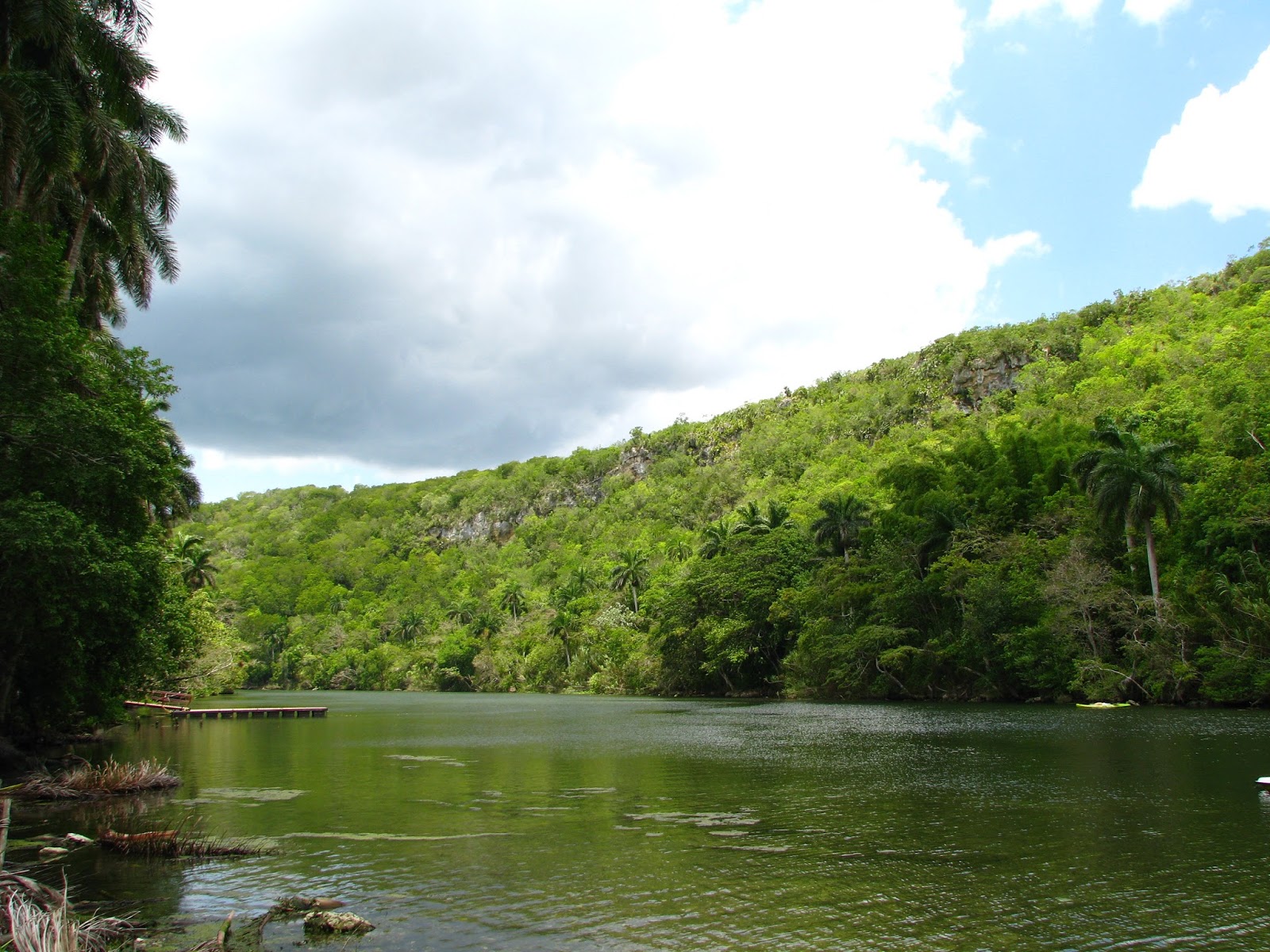
Fig. 15: Vinales Valley in Pinar del Rio, western Cuba.

In our search for old faunas, we extended our explorations to Vinales, a unique valley within the aforesaid region (fig. 15-16). This region is unique for many reasons. One is its extensive karst development, including uncountable honeycombs of mammoth caves within its limestone (fig. 17). These same limestones date back to the middle Jurassic when the Caribbean basis did not exist. However, these conic "mogote" formations we see are geologically recent, dating approximately to the Pliocene, between 5 to 2 million years ago.

The Guaniguanico mountain range is a unique karts region of the world. It includes 400-500 meter tall conic karts formations that resemble giant elephants such as those of the Sierra de Los Organos (the "Sierra of the Organs"). There are other parts of the world with such conic or cockpit karst.  Formations such as those of figures 15 and 16 are present in Jamaica, Hispaniola, Puerto Rico, and Guangxi in China. With the two extremes being the Vinales and the Chinese Guangxi.


Fig. 16: Giant elephant-like hills over 400 m in height called Mogotes, are formed out of uplifted Jurassic limestones.

Salvador Massip and Sara Isalgue wrote in 1923 "Cuba came from the depths of the ocean..."Vinales limestones contain fossil remains of prehistoric marine reptiles and mollusks, such as Plesiosaurus, ammonites, and belemnites. I went there searching for fossils of the early Cretaceous - a period several dozen million years younger than the Jurassic. I am interested in records which provide signals of oceanic anoxic events (OAE) and their effect, in this case of extinction-origination- of microfaunas such as phytoplankton and zooplankton. Forams, short for foraminifera, are microscopic single celled-organisms (heterotrophic Protists) that are part of the zooplankton. Forams can live in ocean bottom sediments (called benthic) or float along the surface of deep oceans (planktonic). When they die, they accumulate slowly on the ocean bottom, becoming part and originating sediments. Their shells or test then provide a record of the surrounding fauna and an approximation for the climate.


Fig. 17: Hanging caves at different levels within the Mogotes, indicating the effects of water at different uplift levels.

By chemically studying these fossil organisms we can determine if there were reducing or oxidizing conditions in the ancient oceans that may have lead to massive die-offs, such as is the case of the OAEs, which could further an understanding of the environment during the early stages of the embryonic Caribbean basin.

But I apologize. I have allowed my enthusiasm to extend this post larger than expected. I hope it has been interesting. But by no means, does it encompass the natural beauty or scientific attraction that the Caribbean, especially Cuba,  possess for these kinds of research. In the end, the goal is the same across geological time: to elucidate and deepen our knowledge of the awesome history of our "Pale Blue" planet.

Stay tuned for more post!