Showing posts with label Castillo de San Severino. Show all posts

Friday, November 16, 2018

Local practices did not often follow royal orders

Our new article is out, published in the Cuban traditional journal Islas. This specialized magazine divulges studies in humanities and social sciences and has been in existence since 1958 when it was first edited and coordinated by Samuel Feijoo. Today, its base is located in the Universidad Central “Marta Abreu” of Las Villas, in central Cuba.

Main drawbridge to the Castillo de San Severino, Matanzas city, Cuba

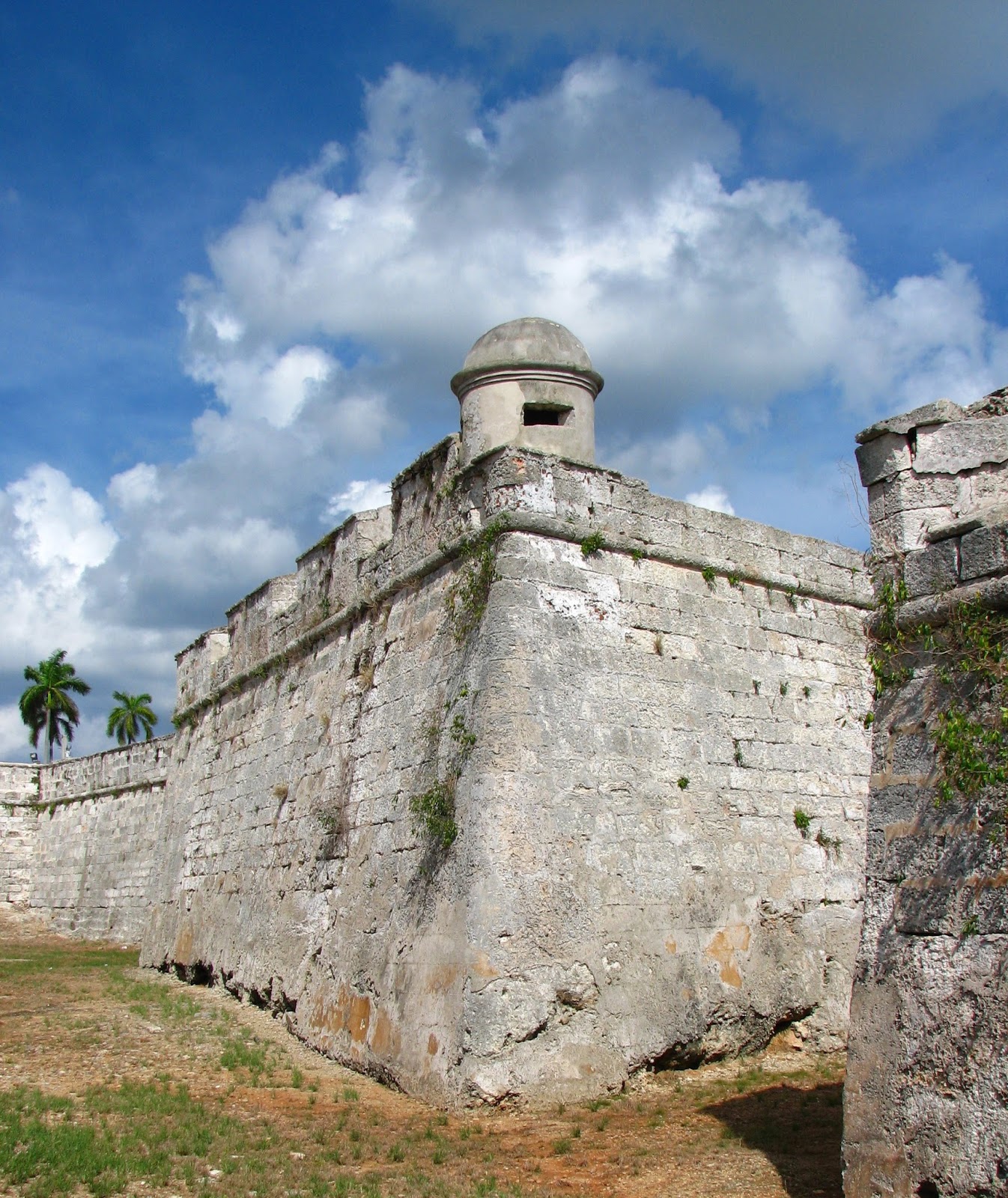
The article deals with the earliest and lest known history of the Castillo de San Severino, the cities’ oldest building and the main reason for the city’s official foundation. Most especially, it drives home the point that many of the ordinances, related to the Castillo’s construction and the city’s foundation, although painstakingly designed and ordained in such manner by the crown, where not fully obeyed by the local officials. This likely mirrors the situation, not just in rural Cuba, but also in its major cities and throughout the New World, far from the Spanish Crown. This was likely the cause of differences in what the crown thought best for its subjects and colonies, and what the inhabitants of those colonies actually needed or felt it was to their best interest.

Here is a brief abstract

Castillo de San Severino in Matanzas had a construction standstill that lasted between 1694 and 1716. The historiography of the fort during these years pointed to the lack of funds to maintain a stable labor and materials for its construction as the main cause of the standstill. However, primary documents, including one by Juan de Síscara, assistant engineer to the viceroy of Mexico in 1696, points to other common factors for such delay of construction. In this way, our study provides new information and a new interpretation on one of the least known years of the construction of San Severino, plus insight into the political dynamics that influenced the construction and maintenance of Cuban military entities during the late 17th Century.

The article can be downloaded for free at Islas or here. On that note, I send out a happy birthday to all my friends from La Habana, a city that turns 499 years today.

Citation:

Orihuela, J., O. Hernández de Lara & R. Viera Muñoz (2018). Órdenes reales y prácticas locales: el Castillo de San Severino de Matanzas y la dinámica colonial (1683-1698). Islas 60 (191): 39-68.


Tuesday, September 11, 2018

Featured article: Clay Tobacco Pipes from a Colonial Refuse Deposit in Fort San Severino, Matanzas Province, Cuba

Hello blog readers, here I provide a link to our article "Clay Tobacco Pipes from a Colonial Refuse Deposit in Fort San Severino, Matanzas Province, Cuba" published on the International Journal of Historical Archaeology, which Spinger Nature has kindly allowed us to share.

This article deals with the identification of clay tobacco pipes used for smocking by prisoners and soldiers of the fort's garrison between the late XVIII and through the middle XIX century. This small collection of smocking pipes, as personal portable objects, speak volumes to the pastime activities available at the fort. More so, it provides a small window into the origin and circulation of pipes.

Visit the link below to read more!

https://rdcu.be/6hvK

Stay tuned!

Monday, July 24, 2017

Fresh off the press: a new Visitor's Guide to Castillo de San Severino is now available

It is with great satisfaction that I announce the first publication, and hopefully, the first of many to come, organized, compiled and edited by researchers at our Progressus Heritage and Community Foundation.


This Guide offers a brief history of the Spanish colonial fort of San Severino, localized in the bay of Matanzas, northern coast of Cuba. We designed it with the visitor in mind. It is organized by chapters, each providing a very brief account of the most prominent locations of the fort. Describing the areas as the visitor will reach them along the modern tourist paths. Many of the chapters include new information gleaned from our current research on the history and archaeology of the Castillo.

Our main wish was to inform and guide the potential visitors, off and on the island. In addition, to provide the townspeople of Matanzas and the Slave Route’s Museum-today part of the Castillo de San Severino-with a freely available Guide for all interested. The new Visitor’s Guide is available for free download here.

It is our great hope that this Castillo can become a point of interest for tourists interested in Cuba’s colonial past. Moreover, that its visits can help provide for its maintenance and permanence, wishfully, for more centuries to come. Feel free to peruse my other posts on this magical spot on Matanzas, either here, on San Carlos de Matanzas blog, or our Progressus blog page, on where we will be publishing parts of the Guide.

Next year, the Castillo will celebrate its 325 years!