As the first blog post of the new year, this fulfills one of the goals of this page: to put new research discoveries, curiosities and research findings in the view of the general public. I will be sharing a few of my most recent research findings through the abstracts of their journal publications.
Thus, without much ado, here they are:
 |
| Spanish (Catalonian) clay tobacco pipes from Castillo de San Severino; early-mid XIX century |
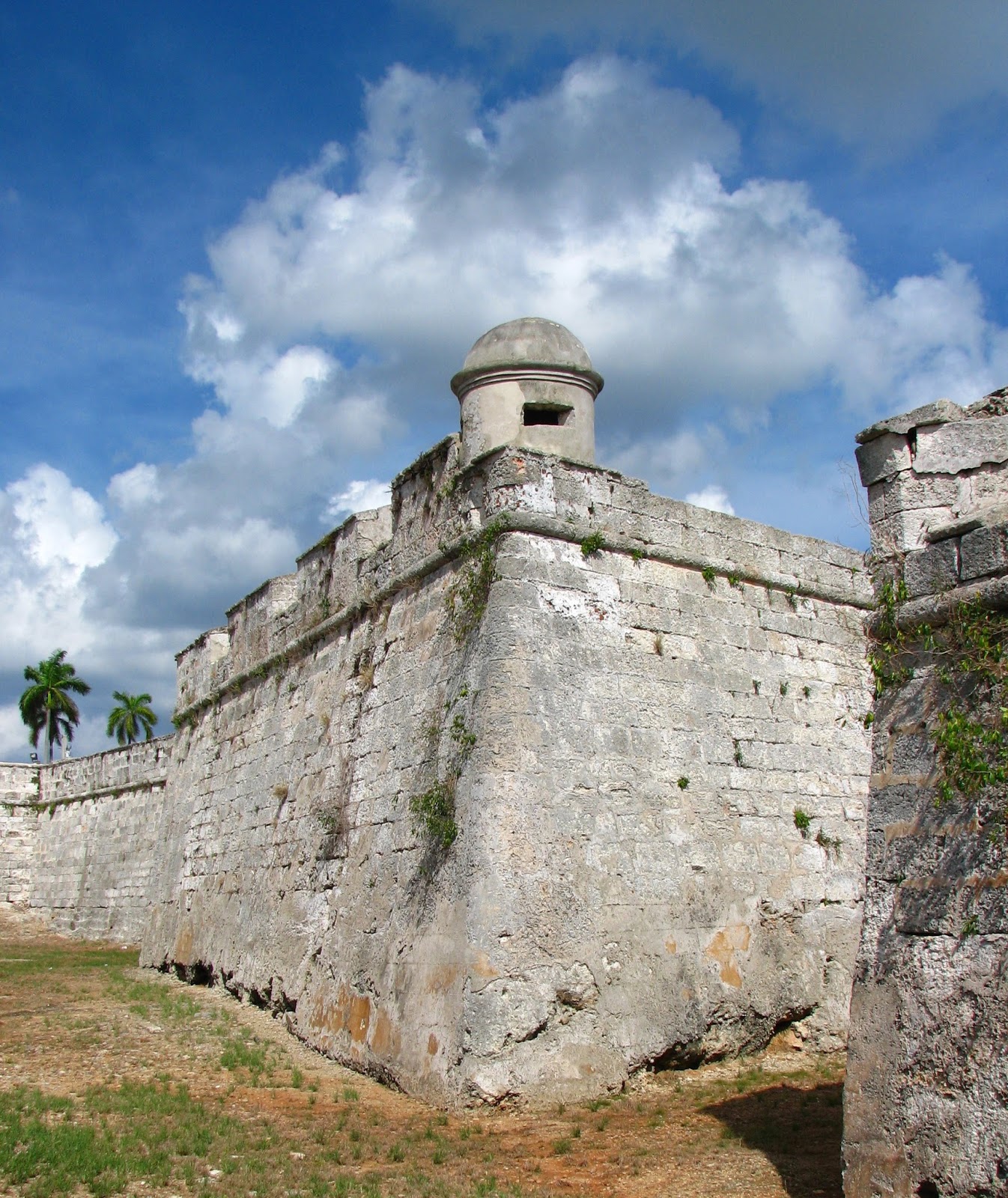
The clay tobacco pipes of Castillo de San Severino fort (Matanzas, Cuba): typology, spectroscopy (SEM-EDS) and contextual analyses
Here we provided a detailed study of a clay tobacco pipe collection, based on typology and using energy dispersion spectroscopy (SEM-EDS), recovered from fort Castillo de San Severino, Matanzas, Cuba. The pipes came from a trash deposit that dates to between the late XVIII century and the late XIX century. The collection includes pipes of north European traditional typology, such as Dutch and English, plus reed-stemmed pipes, including pipes from Catalonia (Spain) and eastern Mediterranean
such as the Balkans. The EDS analysis suggested that the samples studied are not likely of local manufacture, or manufactured with local clays. Our study, based on historic documents and artifact analysis, contributes to the general history of the fort by providing an interpretation of the socioeconomic factors controlling the culture of pipe smocking at the fort. Our data adds valuable information on the archaeology of these portable artifacts in the fort and the region.
New Stereoviews of San Jose de la Vigia, Matanzas, Cuba: A historical contribution and new archaeological perspectives
Here we reported five stereoviews that reveal details of Matanzas city during the mid-XIX, particularly of the Plaza de la Vigía and the fort of San José de la Vigía, previously unexplored in the local historiography. These rare photographs are an invaluable resource to the historic, preservation and archaeological research of these features, which such as the fort, are today long gone. In comparison to the known etchings and sketches, these photographs constitute a less distorted record of the city.
 |
Cover of Cuba Arqueologica, prestigious journal of Caribbean archaeology, with a
stereoview photograph of Plaza and fort La Vigia, Matanzas, Cuba, in 1859. |
First report of the marine mollusk Busycon perversum (Gastropoda: Busyconidae) from the archaeological site of El Morrillo, Matanzas, Cuba
Here we reported the presence of the mollusk
Busycon perversum in the archaeological site of El Morrillo. Although several species of
Busycon are known from colonial sites in Havana, this constitutes the first confirmed record of this alocthonous species in region of Matanzas. This finding, as in the cases in Havana, are interpreted as importation or exchange between Floridian Amerindians, such as the Calusa or Tekestas, in Cuba during the early centuries of the island's colonization. However, it could have been introduced in Cuba also by sailors visiting the Gulf of Mexico and Florida.
 |
| Busycon perversum juv. from El Morrillo |
The First Battle of the Spanish-Cuban-American War (1898): Insights from a Historical and Archaeological Perspective
The Spanish-Cuban-American War of 1898 constituted not only the events leading to the start of the first modern war but also marked the beginning of the colonialist expansion of the United States throughout the world. The explosion of the USS Maine in Havana’s harbor has often been interpreted as the excuse used by the US to get involved in the Cuban War of Independence; a war that Cubans and Spaniards had been fighting since 1895, but rooted since 1868. Previous research has traditionally focused in the naval encounters of the Spanish and US fleets in Santiago de Cuba, or the end of the war with the occupation of Puerto Rico, the Philippines, and Guam, thus underestimating the role of the Cuban troops and leaving the early events of the war poorly explored. Our research focuses on the first battle of the war, which occurred on Matanzas Bay, Cuba, on April 27th, 1898. Historic documentation from Cuban, Spanish, and US archives is analyzed, and compared to the available archaeological data, to deepen the understanding of the defensive and offensive strategies employed, and their impact on the media and their publicist strategies.
 |
| Image, mounted on glass of the bombardment of Matanzas by three USS warships in 1898 |
Contribution to the chronology and paleodiet of an aboriginal individual excavated in the archaeological site of El Morrillo, Matanzas, Cuba
El Morrillo, an archaeological site localized on the margin of the Canímar River, in the bay of Matanzas, is considered one of the most important agroceramist culture deposits of western Cuba. Despite its importance and richness, only one radiocarbon date, based on charcoal, had been reported from this site since 1966. Here we provide the first AMS 14 C date measured directly from human remains, excavated in 2009, along with a carbon and nitrogen stable isotope analysis to infer the diet of this individual. The AMS 14 C provided a radiocarbon age of 420±40 rcyBP (AP) (2σ calAD1420-1523). These results indicate a post-Columbian time of burial, likely near or during the first decades of the Cuban conquest early in the XVI century. The stable isotopes suggest that the individual had a mixed diet, with intermediate carbon consumption, and high on marine/riverine resources, which suggest the exploitation of the nearby coastal and fluvial ecosystems. These values are generally comparable to several populations of similar filiation in the Greater Antilles. Our results highlight the importance of El Morrillo in the study of agroceramist communities in Cuba and the Caribbean.
 |
Cover of Cuba Arqueologica with an architectural plan of La Laja,
interesting water locked fortification planed for the center of the bay of Matanzas
that was never completed. |
Plans for a fort in the middle of the bay of Matanzas: La Laja
The construction of fortifications in strategic or advantageous localities constituted a main method of military landscape colonization. With the economic boom of Matanzas's city, in northwestern Cuba, the importance of the growing port incited the planning of several strategic defense points, but many of them were not completed. One of them, named La Laja, planned in the center of the bay was one of such strategic localities selected for a fortification and lighthouse. Here we analyzed and reported eight unpublished plans that document several of the different projects planned for La Laja. These plans provide insight into the constructive dynamics and the evolution of defense fortifications surrounding the port and city, in this case where the bureaucracy and demolition of fort La Vigia prevented the completion of what could have been a singular and unique engineering feature.
To our great joy, several of our paper's illustrations made the journals front image. None of these accomplishment would have been possible without the help and encouragement of my coauthors, Ricardo Viera Munoz, Odlanyer Hernandez de Lara, Leonel Perez Orozco, and Osvaldo Jimenez. Moreover the patronage and encouragement of Adrian Tejedor, Herman Benitez, and many others that with their guidance and help, made our research process fun and educational. Our most sincere thanks.
For more information visit our other blogs and pages:
San Carlos de Matanzas
Progressus: Arqueologia, Patrimonio y Desarrollo Social
Research Gate
Visit us and stay tuned!