Showing posts with label Matanzas. Show all posts

Monday, October 28, 2024

Fossil News! First Pliocene Land Vertebrate Fossils from Cuba


I’m thrilled to announce the publication of our latest research paper, "First Record of Terrestrial Vertebrates from a Late Pliocene-Early Pleistocene Deposit in Cuba," which uncovers the first documented Pliocene land vertebrate fossils in Cuba’s history to date. Found at the El Abra outcrop in Matanzas, these fossils offer a rare glimpse into the prehistoric fauna of the Greater Antilles, hinting at unique evolutionary patterns and diversity, plus providing new insight into the biodiversity and biogeographic history of the Caribbean region.

While we recognize that possible land vertebrate fossils of older age may exist in the caves of Pinar del Río, these remain untested and are generally assumed to be Pleistocene, and even later in the Pleistocene, in age. As such, our findings from El Abra represent the earliest confirmed fossils within the Late Pliocene-Early Pleistocene range, adding a new dimension to our understanding of Caribbean vertebrate evolution.

One particularly exciting aspect of this discovery includes previously undocumented remains of capromyine rodents (so called hutias or jutias), showcasing unique dental characteristics that hint at possible connections with species in Hispaniola. This find challenges and enriches our understanding of Caribbean vertebrate dispersal and diversification, underscoring the importance of examining overlooked fossil records or outcrop deposits to piece together new evolutionary histories.

I am immensely grateful to my colleagues and co-authors Yasmani Ceballos, Lazaro Viñola, Logel Lorenzo and Alberto Clark, who collaborated on this project, contributing their expertise and dedication to each step of this investigation. Further thanks are due to the friends and institutions, for logistics, conversations, sharing of ideas, knowledge, and collecting permits. 

Take a look and join us in exploring this new chapter of Cuba's fossil record and its broader implications for Caribbean paleontology!


Source: 

Orihuela, J., Viñola-Lopez, L. W., Lorenzo, L., Clark, A., & Ceballos-Izquierdo, Y. (2024). First Record of Terrestrial Vertebrates from a Late Pliocene-Early Pleistocene deposit in Cuba. Journal of South American Earth Sciences, 105200.

Saturday, October 12, 2024

Matanzas Revisited: Unraveling Fact from Fiction in Cuba's Past

For centuries, the traditional narrative surrounding the name "Matanzas" has been accepted as historical fact. According to this widely held belief, the name, which translates to “massacre,” originated from a violent event in which indigenous people of Cuba supposedly drowned a group of Spanish survivors by overturning their canoes while crossing the Bay of Matanzas. This was followed by the hanging of the remaining survivors in a ceiba tree. But upon closer inspection, it becomes evident that this version of events may not be entirely accurate, or even true at all.

A critical reevaluation of historical sources, led by modern scholars, offers a compelling argument that the accepted story of Matanzas may be more myth than reality. Their work, based on an analysis of Diego Velázquez’s Carta de Relación—a letter written by the Spanish governor of Cuba in 1514—presents an alternative view of the events. While Velázquez's letter is by no means free from potential bias, it offers a primary source account that contradicts the violent narrative propagated by later chroniclers like Bartolomé de las Casas and Bernal Díaz del Castillo.


Velázquez’s Account: A Primary Source with a Different Story

Velázquez’s Carta de Relación stands as one of the earliest -and closest in time- accounts of the Spanish interactions with the indigenous people in Cuba. Written in April 1514, just a few years after the events it describes, the letter contains details about the pacification efforts of the Spanish in Cuba and the rescue of three Spanish survivors: García Mexía and two women who had been held by indigenous leaders of the western region of the island. Velázquez notably omits any mention of a massacre or violent confrontation with the indigenous people during this rescue operation.

However, Velázquez does refer to a different massacre, known as the Massacre of Caonao, which is a significant event in Cuban history. This massacre, part of the often violent interactions between Spanish conquistadors and the indigenous population, took place in central Cuba, far from the region where the name Matanzas was superposed. The confusion surrounding the naming of Matanzas may have arisen from later chroniclers conflating these two unrelated events.

In fact, the survivors whom Velázquez rescued were not connected to the area that would later become Matanzas. These individuals had shipwrecked in Guaniguanico, located in present-day Pinar del Río, after a failed expedition from Central America. They were not fleeing from or involved in a massacre in Matanzas. Velázquez’s rescue mission likely took place in the southern territory of what is now Havana, between late 1512 and early 1513. This critical distinction, overlooked or misinterpreted by later chroniclers like Las Casas, highlights that the events in the Bay of Matanzas may have been wrongly attributed to violence, when in reality, it was part of a more complex series of interchanges and interactions.


Questioning the Later Accounts

Bartolomé de las Casas and Bernal Díaz del Castillo are key figures in the perpetuation of the violent narrative associated with the naming of Matanzas. However, both of these chroniclers wrote their accounts decades after the events, and their motivations for shaping the narrative must be considered. Las Casas, in particular, was driven by a moral agenda to highlight the mistreatment of indigenous populations by the Spanish colonizers. His accounts, while influential, are also known for their exaggeration, particularly when it comes to emphasizing Spanish brutality.

In his Historia de las Indias, Las Casas details a massacre in which indigenous people are said to have drowned and hanged Spanish survivors. This story, however, was written long after the fact and cannot be corroborated by primary sources from the time. He himself mentions that he is not remembering these events clearly. Likewise, Díaz del Castillo’s account, written many years after the events, contains discrepancies regarding the number of survivors and the circumstances of their rescue, further complicating the narrative. The unquestionable and excessive use of these, and other chronicles who followed and copied, exacerbated and perpetuated the legend even still. 

The discrepancies between these later accounts and Velázquez’s primary source raise important questions about the reliability of the traditional narrative. While Las Casas and Díaz del Castillo have been influential in shaping the story of Matanzas, their works must be viewed with caution, particularly when they contradict earlier, more immediate accounts like Velázquez’s.


Velázquez’s Bias: A Reasonable Concern?

It is reasonable to question whether Velázquez himself may have been biased in his reporting. As the governor of Cuba and a key figure in the colonization efforts, Velázquez certainly had reasons to present himself and his actions in a positive light. His letter to the crown was meant to showcase his control over the island and the success of his efforts in pacifying the indigenous population. However, even with this potential bias in mind, the absence of any mention of a massacre in Matanzas is significant. If such an event had occurred, Velázquez would have had to address it in some form, if only to justify his actions or downplay the extent of the violence.

Moreover, Velázquez’s letter is not the only source used by Orihuela and Viera in their analysis. They also draw upon archaeological evidence and a study of the region’s toponymy—specifically, the names “Guanima” and “Yucayo,” which have been erroneously linked to the events surrounding the founding of Matanzas. Their research reveals inconsistencies in these place names and shows that the connection between the supposed massacre and the toponymy of the region is likely a later invention, further undermining the traditional narrative. In fact, the Matanzas (= in the form of "Matancas") does not appear in the charts and documents until after 1525. 


The Archaeological Evidence

Archaeological findings in the region provide additional support for Orihuela and Viera’s argument. To date, no physical evidence has been found that corroborates the story of a massacre in the Bay of Matanzas. Instead, the archaeological record suggests that the indigenous populations in the area had a significant and prolonged presence, with evidence of sustained interaction with the Spanish, rather than outright conflict. 

Additionally, the etymology of the name “Matanzas” may have more to do with the economic activities in the region, such as cattle slaughtering, than with a violent event. The term "matanza" was commonly used in Spanish colonies to refer to the killing of animals for food, and it is plausible that this is the true origin of the name, rather than a massacre of Spanish sailors.


The Silent Majority: The Role of Indigenous Peoples in Colonial History

This revised interpretation also sheds light on the often overlooked or minimized role of indigenous populations in the narratives of conquest and colonization. For centuries, indigenous peoples have been portrayed as either victims of violence or passive participants in the colonial process. However, new historiographical approaches are helping to recover the agency of these groups as active players in the history of the Caribbean and Latin America.

In particular, the indigenous peoples of Cuba, like those collectivelly called Taino, were not merely silent witnesses to their own demise. They engaged in complex interactions with the Spanish, negotiating, resisting, and sometimes cooperating with them, depending on the circumstances. The recovery of indigenous agency is an important trend in contemporary scholarship on the conquest of the Americas, and this reinterpretation of the Matanzas story is a part of that broader effort to understand the colonial past in a more nuanced way.


A Revisionist Perspective

In the end, Orihuela and Viera’s work is not merely about defending Velázquez’s account. It is about critically reassessing the evidence, questioning long-held assumptions, and separating myth from historical fact. By reexamining the available documentation, cross-referencing accounts, and considering archaeological data, they offer a revisionist perspective that challenges the traditional story of Matanzas’ naming.

Their approach invites us to rethink the way we understand the early encounters between the Spanish and indigenous people in Cuba. While the idea of a violent massacre may have been compelling to chroniclers like Las Casas, the evidence suggests a more nuanced and peaceful interaction, at least in this instance. It also serves as a reminder that history is often shaped by the interests and biases of those who record it, and that our understanding of the past must be constantly reevaluated in light of new evidence.


Conclusion

The traditional narrative of the massacre at Matanzas may have been a myth, woven together by chroniclers long after the events they described. Through careful analysis of primary sources like Velázquez’s Carta de Relación and a critical evaluation of archaeological and toponymic evidence, Orihuela and Viera provide a fresh interpretation of the events. While Velázquez may have had his biases, the absence of any significant mention of violence in his account, coupled with the lack of corroborating evidence from other sources, suggests that the true story of Matanzas may be far less violent than we’ve been led to believe.

This revisionist perspective encourages us to question the accuracy of historical myths and to seek out the truth behind the legends that have shaped our understanding of the past. As with any historical inquiry, the search for truth is ongoing, and Orihuela and Viera’s work is an important step in the ongoing effort to uncover the real story of Matanzas.

Referenced work:


Saturday, November 20, 2021

New book on the history of Matanzas, Cuba


Historia fundacional de Matanzas: los años formativos (1680-1765) from Aspha Ediciones publishing house (ISBN-978-987-3851-33-9), is a book that covers the planning and population process of the city of Matanzas, northeast of Cuba.

The book provides a rich compendium in 584 pages of detailed information, extracted from the documents of the time, on the planning of San Severino, the main fortification, and the settlement system of the region. Several chapters are dedicated exclusively to the migratory process of whole Spanish families (Canary Islands) that emigrated to the island of Cuba and were later selected to populate the new city of San Carlos de Matanzas in 1693. Lists of founders and other families are provided with details about the date of their arrival, precedence in the Canary archipelago, names and surnames, their physical condition and health history, and in some cases even a physical description. Therefore, these data make this work a relevant source of genealogical information for the investigation of Canarian families who emigrated to Cuba at the end of the seventeenth century and their settlement and distribution within the island since then. In addition to this, details of other ethnic groups and migratory groups are provided, with similar detail, which also included the population of the city of Matanzas and the surroundings of its bay.


The book is available here:


https://www.lulu.com/en/us/shop/johanset-orihuela-león/historia-fundacional-de-matanzas-los-años-formativos-1680-1765/paperback/product-gkngqq.html?page=1&pageSize=4


Friday, May 3, 2019

First Sirenian brain endocast from the Miocene of Cuba

With great pleasure, I announce the recent publication of our paper on the first sirenian endocranial casts yet known from the Caribbean. Our paper, coauthored by the paleontologists Lázaro W. Viñola and Ted Macrini, was published on the specialized Journal of Vertebrate Paleontology this month (link here and here).


Fossilized brain mold of a Dugongid specimen from Matanzas, Cuba


A resume of the major findings can be read in the abstract:

We report and describe the first sirenian endocranial casts from the West Indies based on three specimens collected from two quarries of the late Oligocene-early Miocene Colón Formation, in the Province of Matanzas, western Cuba. We assign them to Dugongidae incertae sedis, based on a phylogenetic analysis of fossil and extant sirenians. Thus, these new specimens provide a unique opportunity to describe the endocranial neuroanatomy of a long-extinct sirenian. The endocasts suggest a dugongid with limited vision and olfactory, based on the diminished olfactory and optic nerves. Additionally, we provide a geologic reinterpretation of the Colón Formation and its paleoecological setting. Altogether, these data provide further insight into the diversity and evolution of sirenians, especially Caribbean dugongs.

For the interested reader, sirenians are marine mammals which include the manatees of the Atlantic Ocean and the dugongs of the Indo-Pacific Ocean. These aquatic mammals were originally called sirenians because seem by sailors from afar, they looked similar to humans or the famed sirens of mythological lore (example from Homer’s The Odyssey). These extraordinary mammals were also documented by Columbus’s and its chroniclers after 1492 (see our post on the matter here).


Main differences between manatees (Trichechydae) and dugongs (Dugongidae).
From Enciclopedia Britanica.

One of the first fossil sirenians discovered in Cuba was found by a local researcher named Eustaquio Calera, from Matanzas. He discovered few remains in the limestones of the town of Cabezas, on the road to Union de Reyes, in central Matanzas Province, Cuba. The significance of these fossils, however, remained undetected until the archaeologist Manuel Rivero found them while studying Calera’s collection. Rivero pressed the matter to Luis S. Varona, the main mastozoologist in Cuba at the time, who published his accounts in 1972.


Anatomy of one of the dugongid brain molds from Matanzas (Cuba) described
in our paper.

This discovery is significant for several reasons:

The first being, that this is thus far, the first brain mold (endocast) reported from any sirenian in the Caribbean fossil record. Second, it suggests the presence of at least two unknown species yet undescribed from the region. Although the Caribbean basin is known to have been a hotspot of sirenian speciation and evolution since the Eocene (~40 million years ago), these additional species support a higher level of diversity during the last 20 million years or during the Miocene. Last, but not least, these kind of fossils are very rare, and represent a unique phenomenon of fossilization. For an endocast or mold to form, the organism must be covered, almost immediately after death, in sediment. That sediment must be fine enough to invade all the nicks and crannies, including the brain cavity. After that, that parcel of mud must become stone o lithified enough to preserve the specimen it encapsulates.

In nature, these events are extremely rare or very low probability. Making this finding a unique and one of a kind opportunity to study the brain anatomy of long-gone organisms that we can study today only through their fossil matter.

We take this opportunity to thank all those that were involved in our project. The discoverers of the fossils in the quarries and the museum curator that allowed us to study their collections. Many thanks are due to our friends and family who supported us with guidance and critical commentaries that no doubt made our work better. Many thanks to all.

Reference:

Orihuela, J., L. W. Vinola Lopez, and T. Macrini (2019). First cranial endocasts of early Miocene sirenians (Dugongidae) from the West Indies. Journal of Vertebrate Paleontology 39: DOI:10.1080/02724634.2019.1584565 


Friday, April 5, 2019

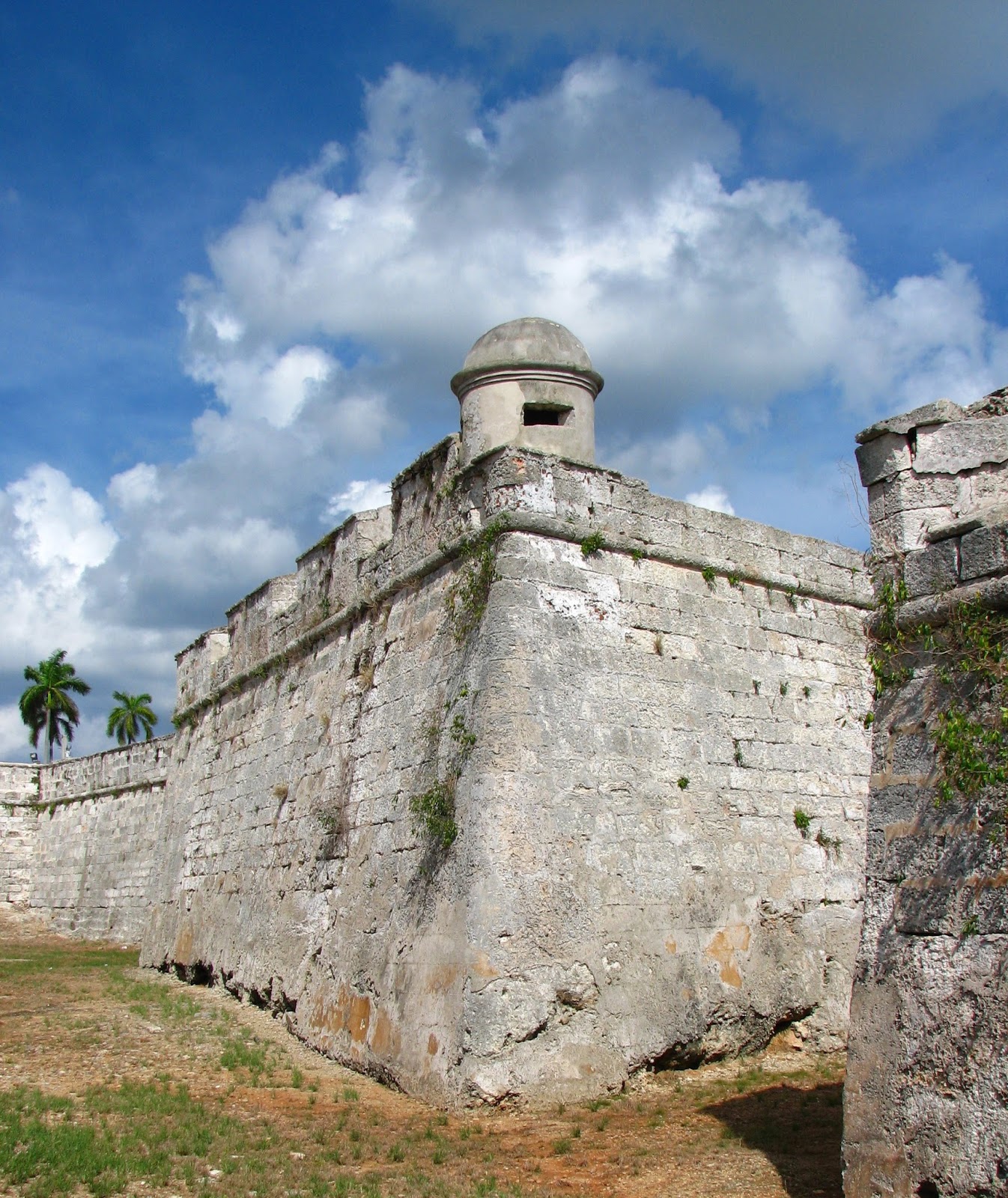
Peñas Altas: a forgotten colonial military fortification

Welcome back blog readers. New publication available!
It is with great pleasure once more that I announce the publication of yet another of our papers in the series dedicated to the archaeology and history of the military fortifications of the bay of Matanzas, Cuba. In this occasion, we discuss new evidence – of archaeological, historical and geological nature –pertaining to the battery of Cagigal or Peñas Altas. Demolished in 1962, this battery was converted to a park and nearly forgotten by locals, was named in the honor of one of Cuba’s colonial governors: don Juan Manuel de Cagigal y Martinez, who governed the island from 1819 until 1821.


One of our new discovered fort plans made it to the cover:
Penas Altas battery plan of 1819


 An abstract of the paper reads thus:

The coastal battery of Peñas Altas was the last fortification to complete the defensive system surrounding Matanzas Bay, Cuba. This research offers new information gathered from the analysis of unpublished maps, historical archives, and a preliminary archaeological survey. Such information has allowed us to limit the construction of the fortification between December 1819 and 1820, and not in 1818- 1819 as assumed by traditional historiography. Four important moments in its evolution are identified: planning and construction (1818-1827), remodeling (1840-1850), expansion (1876-1886), and a second remodeling in 1907. Peñas Altas functioned as a military post throughout the nineteenth century, and later became a police station and munition warehouse until its demolition in 1962. Only a few walls and part of the platform remain, however, they represent an important part of the lost heritage with potential for further research and tourism development.

The paper presents several unknown or inedited documents, plans, maps and photographs that record the history of the battery and the changes it underwent through Cuban history. We also explore the preservation of several of its surviving features and the possibility of turning its current state into a historical park.

The article is available on my other pages here, or on the page of the scientific journal Arquitectura and Urbanismo, on which it was published.

Thank you once more for reading and visiting. Stay tuned for more news!


Recommended citation

Hernández de Lara, O., J. Orihuela León & B. Rodríguez Tápanes (2019). Batería de Peñas Altas: apuntes histórico-arqueológicos sobre una fortaleza olvidada (Matanzas, Cuba). Revista científica de Arquitectura y Urbanismo, XV, 1: 5-22.

Tuesday, February 26, 2019

New fossil records of triggerfish from the Miocene of Cuba

Exciting news for the Cuban fossil record! A new article was recently published on the journal Historical Biology describing a new species of triggerfish (Balistes vegai) and a new occurrence record for the triggerfish species Balistes crassidens from the Miocene of Matanzas, Cuba. This is an exciting new contribution to the geological and fossil record, particularly the region of Matanzas, and the island of Cuba in general.

The article is co-authored by the Cuban researchers Lazaro W. Viñola and Logel Lorenzo along with the specialist Richard Carr of Montana State University. In it, the authors provide not only the description of the new species but also a revision of the taxonomy and fossil record of the genus.

The fish of the genus Balistes are most diverse in the tropical waters of the Indo-Pacific Ocean, with a few species occurring also in the Mediterranean and western Atlantic. Two species are currently known from the Caribbean: Balistes vetula and Balistes capriscus. The new species, B. vegai, is so far the largest species described. It was named in honor of Johnny Vega Piloto, a member of the Cuban Speleological Society, who in 2013 discovered the first fossil evidence.


Copyright 2019
Artistic reconstruction of Balistes vegai by Ethan Schmunk showing
an adult B. vegai chasing a juvenile megalodon shark (Otodus megalodon) in Cuban waters. 

Balistes are peculiar fish characterized by an elongated snout, powerful jaws, and teeth that allow them to prey on invertebrates such as sea urchins. These are often aggressive and territorial fishes. Generally, these are not easily digestible by humans since they tend to be toxic. Nonetheless, people eat them in several parts of Cuba and the Caribbean.

Maybe one of the most relevant aspects of this discovery is its implication for the local fossil record, and Caribbean natural history, geology, and paleontology in general. The presence of triggerfish in the Miocene rocks of Cuba suggests the existence of marine ecosystems similar to those exploited by these fish in the region today. Moreover, it supports the hypothesis that a wide, shallow and warm sea existed in what is today the central lowlands and low hills of the Matanzas region, about a dozen million years ago.


Cite:

Viñola, L. W., R. Carr, and L. Lorenzo (2019). First occurrence of fossil Balistes (Tetradontiformes: Balistidae) from the Miocene of Cuba with the description of a new species and a revision of fossil Balistes. Historical Biology DOI: 10.1080/08912963.2019.1580278.

 
Para leer una versión en español, visite nuestro otro blog San Carlos de Matanzas aquí


Friday, November 16, 2018

Local practices did not often follow royal orders

Our new article is out, published in the Cuban traditional journal Islas. This specialized magazine divulges studies in humanities and social sciences and has been in existence since 1958 when it was first edited and coordinated by Samuel Feijoo. Today, its base is located in the Universidad Central “Marta Abreu” of Las Villas, in central Cuba.

Main drawbridge to the Castillo de San Severino, Matanzas city, Cuba

The article deals with the earliest and lest known history of the Castillo de San Severino, the cities’ oldest building and the main reason for the city’s official foundation. Most especially, it drives home the point that many of the ordinances, related to the Castillo’s construction and the city’s foundation, although painstakingly designed and ordained in such manner by the crown, where not fully obeyed by the local officials. This likely mirrors the situation, not just in rural Cuba, but also in its major cities and throughout the New World, far from the Spanish Crown. This was likely the cause of differences in what the crown thought best for its subjects and colonies, and what the inhabitants of those colonies actually needed or felt it was to their best interest.

Here is a brief abstract

Castillo de San Severino in Matanzas had a construction standstill that lasted between 1694 and 1716. The historiography of the fort during these years pointed to the lack of funds to maintain a stable labor and materials for its construction as the main cause of the standstill. However, primary documents, including one by Juan de Síscara, assistant engineer to the viceroy of Mexico in 1696, points to other common factors for such delay of construction. In this way, our study provides new information and a new interpretation on one of the least known years of the construction of San Severino, plus insight into the political dynamics that influenced the construction and maintenance of Cuban military entities during the late 17th Century.

The article can be downloaded for free at Islas or here. On that note, I send out a happy birthday to all my friends from La Habana, a city that turns 499 years today.

Citation:

Orihuela, J., O. Hernández de Lara & R. Viera Muñoz (2018). Órdenes reales y prácticas locales: el Castillo de San Severino de Matanzas y la dinámica colonial (1683-1698). Islas 60 (191): 39-68.


Friday, October 12, 2018

Matanzas’s City turns 325

For the town of San Carlos de Matanzas, the month of October if full of celebration. It was on that month, in 1693, that the city was officially founded. This year, however, it was more special than ever thanks to the herculean efforts of the Conservator’s Office and its many workers, who have restored the historical part of the city to its colonial splendor and glamour.


Front cover of Revista Matanzas, where our article is featured

In celebration of this historical moment, albeit local and personal, we contributed with a small publication on the local magazine Matanzas. In it, we published a small piece on Matanzas's first coat of arms. Unknown until now was the revelation that the governor Severino de Manzaneda, who founded de city in October 1693, had provided the city with an official coat of arms since 1694, which was approved by the crown in 1698, but unfortunately forgotten by local and crown officials until 1828, when the colonial shield was redesigned.


Colonial Coat of Arms given by the Spanish Crown to the city of Matanzas, 1828,
Courtesy of the Archivo General de Indias.

Although this may seem trivial, the coat of arms of Matanzas has been seen as a unifying symbol, first of its relationship to the Spanish crown and then to the Republic. More interestingly, it was previously unreported or unknown by local and national historians. Thus, this little note added a little piece of history, which was lost amongst the old archive papers in Seville, providing a different hue to our local history's color. Moreover, it adds to the poorly studied Cuban and Novohispanic heraldry.

That article can be accessed for free here. Other posts on Matanzas history can be accessed here.

Stay tuned for more updates on fossils and old documents!

Article can be sited as:

Orihuela León, J., R. A. Viera Muñoz & L. Pérez Orozco (2018). El blasón desconocido: Primer escudo de San Carlos de Matanzas. Revista Matanzas XIX (1/2): 7-11.

Tuesday, September 11, 2018

Featured article: Clay Tobacco Pipes from a Colonial Refuse Deposit in Fort San Severino, Matanzas Province, Cuba

Hello blog readers, here I provide a link to our article "Clay Tobacco Pipes from a Colonial Refuse Deposit in Fort San Severino, Matanzas Province, Cuba" published on the International Journal of Historical Archaeology, which Spinger Nature has kindly allowed us to share.

This article deals with the identification of clay tobacco pipes used for smocking by prisoners and soldiers of the fort's garrison between the late XVIII and through the middle XIX century. This small collection of smocking pipes, as personal portable objects, speak volumes to the pastime activities available at the fort. More so, it provides a small window into the origin and circulation of pipes.

Visit the link below to read more!

https://rdcu.be/6hvK

Stay tuned!

Tuesday, January 2, 2018

Few research abstracts: 2015 - 2017

As the first blog post of the new year, this fulfills one of the goals of this page: to put new research discoveries, curiosities and research findings in the view of the general public. I will be sharing a few of my most recent research findings through the abstracts of their journal publications.

Thus, without much ado, here they are:


Spanish (Catalonian) clay tobacco pipes from Castillo de San Severino; early-mid XIX century

The clay tobacco pipes of Castillo de San Severino fort (Matanzas, Cuba): typology, spectroscopy (SEM-EDS) and contextual analyses

Here we provided a detailed study of a clay tobacco pipe collection, based on typology and using energy dispersion spectroscopy (SEM-EDS), recovered from fort Castillo de San Severino, Matanzas, Cuba. The pipes came from a trash deposit that dates to between the late XVIII century and the late XIX century. The collection includes pipes of north European traditional typology, such as Dutch and English, plus reed-stemmed pipes, including pipes from Catalonia (Spain) and eastern Mediterranean
such as the Balkans. The EDS analysis suggested that the samples studied are not likely of local manufacture, or manufactured with local clays. Our study, based on historic documents and artifact analysis, contributes to the general history of the fort by providing an interpretation of the socioeconomic factors controlling the culture of pipe smocking at the fort. Our data adds valuable information on the archaeology of these portable artifacts in the fort and the region.


New Stereoviews of San Jose de la Vigia, Matanzas, Cuba: A historical contribution and new archaeological perspectives

Here we reported five stereoviews that reveal details of Matanzas city during the mid-XIX, particularly of the Plaza de la Vigía and the fort of San José de la Vigía, previously unexplored in the local historiography. These rare photographs are an invaluable resource to the historic, preservation and archaeological research of these features, which such as the fort, are today long gone. In comparison to the known etchings and sketches, these photographs constitute a less distorted record of the city.


Cover of Cuba Arqueologica, prestigious journal of Caribbean archaeology, with a
stereoview photograph of Plaza and fort La Vigia, Matanzas, Cuba, in 1859.


First report of the marine mollusk Busycon perversum (Gastropoda: Busyconidae) from the archaeological site of El Morrillo, Matanzas, Cuba

Here we reported the presence of the mollusk Busycon perversum in the archaeological site of El Morrillo. Although several species of Busycon are known from colonial sites in Havana, this constitutes the first confirmed record of this alocthonous species in region of Matanzas. This finding, as in the cases in Havana, are interpreted as importation or exchange between Floridian Amerindians, such as the Calusa or Tekestas, in Cuba during the early centuries of the island's colonization. However, it could have been introduced in Cuba also by sailors visiting the Gulf of Mexico and Florida.

Busycon perversum juv. from El Morrillo

The First Battle of the Spanish-Cuban-American War (1898): Insights from a Historical and Archaeological Perspective

The Spanish-Cuban-American War of 1898 constituted not only the events leading to the start of the first modern war but also marked the beginning of the colonialist expansion of the United States throughout the world. The explosion of the USS Maine in Havana’s harbor has often been interpreted as the excuse used by the US to get involved in the Cuban War of Independence; a war that Cubans and Spaniards had been fighting since 1895, but rooted since 1868. Previous research has traditionally focused in the naval encounters of the Spanish and US fleets in Santiago de Cuba, or the end of the war with the occupation of Puerto Rico, the Philippines, and Guam, thus underestimating the role of the Cuban troops and leaving the early events of the war poorly explored. Our research focuses on the first battle of the war, which occurred on Matanzas Bay, Cuba, on April 27th, 1898. Historic documentation from Cuban, Spanish, and US archives is analyzed, and compared to the available archaeological data, to deepen the understanding of the defensive and offensive strategies employed, and their impact on the media and their publicist strategies.

Image, mounted on glass of the bombardment of Matanzas by three USS warships in 1898


Contribution to the chronology and paleodiet of an aboriginal individual excavated in the archaeological site of El Morrillo, Matanzas, Cuba

El Morrillo, an archaeological site localized on the margin of the Canímar River, in the bay of Matanzas, is considered one of the most important agroceramist culture deposits of western Cuba. Despite its importance and richness, only one radiocarbon date, based on charcoal, had been reported from this site since 1966. Here we provide the first AMS 14 C date measured directly from human remains, excavated in 2009, along with a carbon and nitrogen stable isotope analysis to infer the diet of this individual. The AMS 14 C provided a radiocarbon age of 420±40 rcyBP (AP) (2σ calAD1420-1523). These results indicate a post-Columbian time of burial, likely near or during the first decades of the Cuban conquest early in the XVI century. The stable isotopes suggest that the individual had a mixed diet, with intermediate carbon consumption, and high on marine/riverine resources, which suggest the exploitation of the nearby coastal and fluvial ecosystems. These values are generally comparable to several populations of similar filiation in the Greater Antilles. Our results highlight the importance of El Morrillo in the study of agroceramist communities in Cuba and the Caribbean.

Cover of Cuba Arqueologica with an architectural plan of La Laja,
interesting water locked fortification planed for the center of the bay of Matanzas
that was never completed.

Plans for a fort in the middle of the bay of Matanzas: La Laja

The construction of fortifications in strategic or advantageous localities constituted a main method of military landscape colonization. With the economic boom of Matanzas's city, in northwestern Cuba, the importance of the growing port incited the planning of several strategic defense points, but many of them were not completed. One of them, named La Laja, planned in the center of the bay was one of such strategic localities selected for a fortification and lighthouse. Here we analyzed and reported eight unpublished plans that document several of the different projects planned for La Laja. These plans provide insight into the constructive dynamics and the evolution of defense fortifications surrounding the port and city, in this case where the bureaucracy and demolition of fort La Vigia prevented the completion of what could have been a singular and unique engineering feature.

To our great joy, several of our paper's illustrations made the journals front image. None of these accomplishment would have been possible without the help and encouragement of my coauthors, Ricardo Viera Munoz, Odlanyer Hernandez de Lara, Leonel Perez Orozco, and Osvaldo Jimenez. Moreover the patronage and encouragement of Adrian Tejedor, Herman Benitez, and many others that with their guidance and help, made our research process fun and educational. Our most sincere thanks.

For more information visit our other blogs and pages:

San Carlos de Matanzas

Progressus: Arqueologia, Patrimonio y Desarrollo Social

Research Gate

Visit us and stay tuned!

Thursday, October 12, 2017

Our New Book: Matanzas in the Viewfinder of Time!

With great pleasure and excitement, after prolonged anticipation, here I present our latest publication, our book “Matanzas en el Visor del Tiempo” or Matanzas in the Viewfinder of Time. It took several years of research to complete, from dream to reality, and it is now finally ready. We are proud that it will fill-in a gap in the history of our hometown, Matanzas city, Cuba. No doubt, the sacrifice and long wait it took to see it published was worthwhile. We hope it is as enjoyable to you as it is for us.

Concord Bridge, completed in 1878 by Spanish-born architect Pedro Celestino del Pandal y Sanchez

This book was written in Spanish by Leonel Pérez Orozco, Matanzas City Conservator, Luis R. González Arestuche, Matanzas-born architect and architecture historian, plus archaeologist Ricardo Viera Muñoz, and myself. Karell Bofill Bahamonde graced our work with his graphic design and modern photographic editing. And last but not least, the modern photographs of Jorge I. Rodríguez.


First leaf of Matanzas en el Visor del Tiempo (2017) Ed. Bolona.

Our book was idealized as a two-volume visual and historical compendium. We started it in 2012 and was completed by 2014, when it was tentatively published by the Felix Varela, publisher of the University of Havana. However, several reasons precluded it from being finally printed there. Finally, thanks to the help of the Office of the Conservator and city Historian of Matanzas, and Havana, specially Eusebio Leal Spengler, our book was published this month. It is a 725-page single volume with over 300 previously unedited and unpublished photographs, few as early as 1859 up to the present.


Matanzas's Cathedral of San Carlos de Borromeo,
patron saint of the city and one of its most emblematic locations.
View from early XX century and present.

This current edition (2017) outlines the architectural evolution and history of Matanzas city. Many of the photographs represent long-gone locations and buildings. It shows a full spectrum of lost patrimony, in the way of architecture and landscape design, that has characterized the changes of the last 100 years. It shows Cuban life as it was.

Some of the oldest photographs were taken by American photo-entrepreneurs, established in New York City, who sent their photographers to capture the “exotic” world of Spanish Cuba. Among them was E. Anthony and Co., who sent their photographer George N. Barnard to Cuba for their album “Cuban Views” (1860) and “American Views” (1870).

One of the oldest photographs known of Matanzas city. This one was taken in 1859 by G. N. Barnard
for E. Anthony and Co. "Cuban Views" stereoview album.

We take this opportunity to thank those friends and colleagues whose collaboration, patience, and insight made, no doubt, a large impression on the pages of our book and our experience.

Thank you so much.


Recommended citation: Pérez Orozco, L., L. R. Rodríguez Arestuche, J. Orihuela León, and R. A. Viera Muñoz (2017). Matanzas en el Visor del Tiempo. Editorial Boloña, La Habana.

See our upcoming publication for more details:

Orihuela, J. and R. A. Viera (2016). Fotografias historicas de la bateria de San Jose de la Vigia, Ciudad de Matanzas, Cuba. Revista Arqueologica Cuba Arqueologica, 9 (1): 1-9.


Monday, July 24, 2017

Fresh off the press: a new Visitor's Guide to Castillo de San Severino is now available

It is with great satisfaction that I announce the first publication, and hopefully, the first of many to come, organized, compiled and edited by researchers at our Progressus Heritage and Community Foundation.


This Guide offers a brief history of the Spanish colonial fort of San Severino, localized in the bay of Matanzas, northern coast of Cuba. We designed it with the visitor in mind. It is organized by chapters, each providing a very brief account of the most prominent locations of the fort. Describing the areas as the visitor will reach them along the modern tourist paths. Many of the chapters include new information gleaned from our current research on the history and archaeology of the Castillo.

Our main wish was to inform and guide the potential visitors, off and on the island. In addition, to provide the townspeople of Matanzas and the Slave Route’s Museum-today part of the Castillo de San Severino-with a freely available Guide for all interested. The new Visitor’s Guide is available for free download here.

It is our great hope that this Castillo can become a point of interest for tourists interested in Cuba’s colonial past. Moreover, that its visits can help provide for its maintenance and permanence, wishfully, for more centuries to come. Feel free to peruse my other posts on this magical spot on Matanzas, either here, on San Carlos de Matanzas blog, or our Progressus blog page, on where we will be publishing parts of the Guide.

Next year, the Castillo will celebrate its 325 years!


Tuesday, January 31, 2017

The Bats of Matanzas

The Province of Matanzas, in western Cuba, is known for the wonderful white sands of Varadero Beach, its turquoise waters, the amazing Bellamar caves, and the Zapata Swamp, the largest "humedal" in all the Caribbean. What Matanzas is not known for, however, is for its richness in bat species. Of the 28 living species recorded for the Cuban archipelago, 26 inhabit the province of Matanzas, representing the six bat families that inhabit Cuba (1).


Leach's Single-Leaf nosed bat (Monophyllus redmani).
This species feeds mostly on pollen and plays a key role in pollination of plants.

A reason for the high diversity of bats in Matanzas may be that Cuba does not possess major geographical barriers such as very tall mountains or deserts. Instead, the island is characterized by its low-lying landscape, with hills that rarely surpass 300 m in height. As a result, bat distribution in Cuba is highly homogeneous. Similar numbers of species are found in all other of Cuba's 15 provinces. This could be a reflection of the area's most recent geological history or less collecting efforts in the rest of Cuba.

The Cuban Archipelago (GoogleEarth). 

Bats are amazing creatures, with amazing adaptations. With their skin-webbed wings, velvety fur, and sharp teeth, bats have probably cruised the Cuban skies in search of food and shelter for a least 33 million years (Eocene-Oligocene), when the island emerged and became available for colonization; although, unfortunately, we only have bat fossils from the last 20 thousand years (2).

Waterhouse's Leaf-nosed bat (Macrotus waterhousei). 

The biological diversity and uniqueness of Cuba is a result of the island’s intricate geological history and its long isolation from the mainland. Over 60% of the Cuban landscape is karstic, and nearly 80 % if the submerged platform is counted, indicating a high potential in the availability of caves, crucial shelters that allow high species richness. In fact, this has been correlated by bat researchers (Brunett and Medellin, 2001). Of the 28 known Cuban bats, 15 are strict cave -dwellers, with most others using caves opportunistically (1).

Insectivorous Waterhouse's Leaf-nosed bat (Macrotus waterhousei) in flight

Here is where Matanzas shines. Matanzas harbors today the most extensive subaerial karst region of the entire Cuban archipelago, a potentially very cave-rich region ~65,500 km² wide. Probably, no other province in Cuba has more caves available for bat roosting than Matanzas today. Moreover, this was more strikingly so 10,000 years ago, when the Gulf of Batabanó, south of the western half of Cuba, had the largest potential in the availability of caves for bat roosting anywhere in the Cuban archipelago, competing in the Caribbean only with the Bahama bank. Once the ice of the last glacial maximum melted with the warmer temperatures of the Holocene epoch, sea level rose and inundated most of the Cuban ancient karst plains, drowning about ~13,300 km² of latent cave-rich territory (3), essential for bat life in the island, and likely culling the territory of a few species. Many have postulated this as the reason for the disappearance of several bat species.

Jamaican Fruit-eating bat Artibeus jamaicensis  roosting on
the calcarenite limestone of Varadero's Ambrosio Cave. 

Matanzas has played an important role in the study of Cuban bats since at least the XIX century. Four of Cuba's bats Pteronotus parnelli, Pteronotus quadridens, Phyllonycteris poeyi and Tadarida brasiliensis (muscula), were collected and described for the first time from Matanzas, near the coffee plantation Fundador de Canímar. This feat is the work of the German naturalist, Johannes Gundlach.

Sooty Moustached-bat Pteronotus quadridens

Gundlach stopped in Cuba on his way to South America and fell in love with the island. I venture to say, he fell in love with Matanzas as well, for he took residence there for nearly the rest of his life. He settled in the lush region near the Canímar River, where he stayed with the Booth family who had plantations there. Gundlach roamed the countryside, especially the Zapata Swamp, and the Canímar River gorge where he observed and collected specimens of mollusks, reptiles, and bats.

Albumen print of Johannes Gundlach (XIX century)

It is through the work of the proliferous Johannes Gundlach and Gilberto Silva Taboada that I came to love bats. In 1992, my parents gave me Silva Taboada's Los Murcielagos de Cuba (The Bats of Cuba), which to my delight had a great introduction to the life of Gundlach and his bat research.

Two-thousand-year-old fossils of Jamaican Fruit-eating bat (above)
and the ultra rare Cuban pallid bat Antrozous koopmani (below). 

Under the auspice of Gundlach and Silva, I studied the bats living in the roof of our schools and nearby caves, amassing a large set of information, with other colleagues, on the bat diversity in the city and nearby caves. This information resulted in over 100 new fossil and modern bat-collecting localities, several publications, and first records for the province of Matanzas.
For example, we (Ricardo Viera and I) reported the new records of the rare and extinct Common vampire bat Desmodus rotundus, Cuban fruit-eating bat Artibeus anthonyi, Peter’s ghost-faced bat Mormoops megalophylla, Greater funnel-eared bat Natalus primus, and Koopman’s pallid bat Antrozous koopmani. In addition, to new records of living Cuban lesser funnel-eared bat Chilonatalus macer, Cuban yellow bat Lasiurus insularis and Pfeiffer’s red bat Lasiurus pfeifferi , and including remote localities in the Zapata Swamp as in the urban Varadero (see publications here, and Viera's here).


A male Jamaican Fruit-eating bat Artibeus jamaicensis
from Palenque Hill Cave, Mayabeque. 

Currently, we are finishing a gazetteer on all the known fossil and modern bat localities in the province that can be useful towards entropy modeling for species distribution in the archipelago. We hope to collaborate with all those interested.

More so, the research continues. Some of our findings have been corroborated by Proyecto CUBABAT under the direction of Melissa Connelly, with the collaboration of colleagues in Matanzas. They have recently reported, and photographed, the Cuban fig-eating bat Phyllops falcatus in Varadero, so far only reported there from fossil remains (see citations above), and the Cuban lesser funnel-eared bat Chilonatalus macer, and Pfeiffer’s red bat Lasiurus pfeifferi (M. Connelly, pers. comm.) This project has a great potential, for it disseminates important information on the ecological importance of bats. Additionally,  through research, they collect useful data crucial for bat conservation in not only Matanzas but also all of Cuba and the Greater Antilles.

We wish them success!


Acknowledgements

I thank once more, my friend and mentor Dr. Adrian Tejedor for his support and guidance. And once again for helping unravel my torturous prose. Thank you profe. I also thank Ricardo A. Viera, Lazaro Vinola, Leonel Perez, Canido Santana, and Joel Monzon for the information provided and years of trecking up and down the caves of Matanzas in search of bats and fossils.

Sources


1. Silva-Taboada, G. 1979. Los Murciélagos de Cuba. Editorial Academia, La Habana. 424pp.

2. Iturralde-Vinent, M. see his geological literature regarding Matanzas on Biblioteca Digital Cubana de Geociencias.

3. Atlas Nacional de Cuba 1969-1985.

Jiménez, O., M. M. Condis, and E. García. 2005. Vertebrados post-glaciales en un residuario fósil de Tyto alba scopoli (Aves: Tytonidae) en el occidente de Cuba. Revista Mexicana de Mastozoología, 9:84-111.

Orihuela, J. 2011. Skull variation of the vampire bat Desmodus rotundus (Chiroptera: Phyllostomidae): Taxonomic implications for the Cuban fossil vampire bat Desmodus puntajudensis. Chiroptera Neotropical 17(1): 963-976.

Orihuela, J. 2012. Late Holocene fauna from a cave deposit in Western Cuba: post-Columbian occurrence of the vampire bat Desmodus rotundus (Phyllostomidae: Desmodontinae). Caribbean Journal of Science, 46 (2): 297-313.

Orihuela, J., and A. Tejedor. 2012. Peter's ghost-faced bat Mormoops megalophylla (Chiroptera: Mormoopidae) from a pre-Columbian archaeological deposit in Cuba. Acta Chiropterologica 14(1): 63-72.

Orihuela, J., R. Viera, and L. Vinola. 2017. New bat records based on modern and fossil remains from the province of Matanzas, Cuba.

Suárez, W. 2005. Taxonomic Status of the Cuban Vampire Bat (Chiroptera: Phyllostomidae: Desmodontinae: Desmodus). Caribbean Journal of Science 41 (4):761-767.

Viera, R. A. 2004. Aportes a la Quiropterofauna nacional. 1861: Revista de Espeleologia y Arqueologia, Matanzas, 5 (1): 21-23.

Woloszyn, B.W., and N.A. Mayo. 1974. Postglacial remains of a vampire bat (Chiroptera: Desmodus) from Cuba. Acta Zool.Cracoviensia 19:253-265.


Saturday, April 9, 2016

First Anniverary of Fossil Matter!

Fossil Matter turns one! How time flies. It has been a great year of rambling on old and new ideas. I am looking forward to another great year of research, discovery, and science.

And a great way to celebrate the ever ongoing process of science and the anniversary of my blog is by announcing the recent publication of my article Clay tobacco pipes from a colonial refuse deposit in fort San Severino, Matanzas Province, Cuba , in the International Journal of Historical Archaeology (available at Springer). It took nearly a decade to complete our research, and then finally find the time to write it, edit it, re-edit it, edit it once more, and did I say edit it again? Yes!


I co-wrote it/researched it with my colleague Ricardo Viera, who had the great opportunity to conduct the actual excavation at Fort San Severino (a subject of one of my previous posts), and to study the artifacts extracted there. He is also my co-author on our blog dedicated to the history of San Carlos de Matanzas, our city of birth in Cuba, where we took our first steps into the world of science and exploration.

In a gist, the article deals with clay tobacco pipes excavated from fort San Severino colonial-era latrines. These interesting objects provide a great insight into many aspects of the everyday life at the fort, for both the military personnel and the prisoners kept there.

Clay pipes were used to smoke tobacco at the fort. Because they are personal objects, used for personal entertainment or habit, in times of leisure, they can tell us a bit about their behavior and preferences. Also, they can hint about the socio-economics of the fort, and because the fort played such a central role in the city of Matanzas, it too can hint about socioeconomics there. For instance, the dominance of one type of pipe over another can suggest where these pipes were likely coming from, and thus hint with who the fortians were buying or trading. Or if the articles were recirculated or reused in hard times.


These personal objects had a very short life, meaning they broke easily and were discarded rapidly. This provides great insight into the age of the artifacts, and how long it took the deposit to form. If it formed out a whim of re-construction or day to day trash disposal.

The trash in the latrines of our deposit, date to a period after the mid 18th century, that is the 1770s, and through the 19th century (the 1800s) until the latrines were filled as the fort turned into a military prison toward the last half of the 19th century. The presence of pipes manufactured in Catalonia, in Spain, corroborate well with the large immigration of Catalan merchants in Matanzas during this period. During the late 18th century Matanzas was a mere outpost with incipient trade, low population, and riddled by hardship. It is not until the mid 19th century that Matanzas blooms into the second most important port in Cuba, a status that dubbed the city as the Athens of Cuba. The tobacco pipes, along with the other artifacts, thus provide a snapshot of life at the fort during this important socioeconomic shift. They speak volumes on life then.


The history of the fort and its archaeology are very interesting, but I will leave them for another opportunity. However, bits and pieces of that history gleam in the posts of our joint venue with Proyecto Progressus, and the articles of the few archaeologists that have actually worked the site (citations therein).

Unfortunately, our paper did not make it in time for this year's SAA (Society for American Archaeologist) held, as I type, in Orlando, Florida. But I would like to take this opportunity, instead thank all those researchers, friends, and colleagues that helped us along the way. They are Leonel P. Orozco, Adrian Tejedor, Roger Arrazcaeta, Odlanyer Hernandez, Peter Davey, Byron Sudbury, Osvaldo Jimenez, and other pipe archaeologists around the world.

Thank you. 

I look forward to yet another year of posts and more research, with the hope that it will contribute, at least a grain, in fostering an interest for our culture's historical sciences. The ancient philosophers said that learning and remembering history helps in advancing positively our society by not repeating the mistakes of the past and enriching our present. 


Sunday, February 21, 2016

Project Progressus: Archaeology of Conflict


As you can tell from my posts, I love history, either in the rocks, fossils, or human records. I have recently joined Project Progressus an international research group interested in the archaeology of belic conflicts and the material and collective memories that these events have left behind in Cuba and Latin America.

Project Progressus has a self-titled blog page of which Odlanyer Hernández de Lara, a Cuban archaeologist with extensive work experience in Cuba and Argentina, is the editor and main contributor of blog Progressus. Odlanyer is also the editor in chief of Cuba Arqueológica, a journal that specializes in Caribbean archaeology, but particularly in the communication of advances in archaeological research in Cuba.

The explosion of the USS Maine in the bay of Havana on February 15, 1898, as depicted by an unknown artist for the Muller Luchsinger & Co New York. This incident launched the Spanish-American War or the "splendid little war" as was dubbed by Secretary of State John Hay. 

The scope of the project is to promote and communicate advances concerning the recovery of the material remains and collective memories of battle-conflict archaeology in Cuba and Latin America. This includes not only elucidating aspects of relatively modern conflicts such as the Spanish-American war and the Cuban Missile Crisis but also of conflicts earlier in the colonial period. My colleagues and I will be contributing by participating in field work, workshops, organization, and writing additional posts to increase accessibility to the archaeological information that the project will generate.

I am excited to enter Progressus not only because I will be contributing to the body of historical knowledge and deepen my own about colonial Cuba, but also because I will get the opportunity to collaborate and learn from great archaeologists with a deep understanding of this subject.

Without much ado, the reader is thus redirected to Progressus page for further information and interesting future posts.