Monday, December 11, 2017

Nesophontes: The Discovery of the first Greater Antillean Island Slayer

Nesophontes are a small group of shrew-like mammals with a very primitive past that reaches as far back as the Cretaceous - when the dinosaurs roamed this planet. We owe its discovery to Harold H. Anthony, one of the most proliferous pioneers of Caribbean vertebrate paleontology.

Original illustration of the type description of Nesophontes edithae H. E. Anthony 1916

The genus Nesophontes is today grouped within the Eulipotyphla order. This is a group of basal placental mammals that are today considered ancestrally associated to Solenodon and other North American extinct shrew-like micromammals, but surprisingly, not to the African tenrecs.  They were small, likely venomous, nocturnal and semi-fossorial mammals endemic to the Great Antilles, where they had a widespread distribution, with the interesting exception of The Bahamas and Jamaica.

Solenodon paradoxus from Hispaniola at the Mammalogy collection of the AMNH

By 1915, H. E. Anthony had a hint of the existence of Nesophontes from fossils found in the island of Puerto Rico. Dr. Franz Boas, the German-American father of modern anthropology, had sent material from his expedition in Puerto Rico to the American Museum of Natural History in New York City (AMNH) that same year. Anthony worked as a paleontologist there, and from Boas's material he extracted the first incomplete specimens of Nesophontes. But these were not enough to describe a new species.

Left: Franz Boas, German American Anthropologist, circa 1916. Right: Harold H. Anthony, circa 1930s.

In fact, it was Dr. Anthony's wife, Edith I. Anthony, who on July 19, 1916, discovered the first undoubtable evidence of the existence of this peculiar mammal in Cueva Clara, near Morovis, Puerto Rico. Anthony, in honor of its wife, named the type species Nesophontes edithae.

Type specimen of Nesophontes edithae AMNH 14174, collected by Mrs. Anthony in 1916

The study of Nesophontes is forever tied to the efforts of Anthony, the discovery of his wife and the material sent by Franz Boas. Gerritt S. Miller and Glover M. Allen, in addition, played a role too in the further discovery and study of these peculiar extinct mammals. In 1919, Anthony described a new species, Nesophontes longirostris, this time from a cave deposit in Daiquiri, southeastern Cuba.

H. E. Anthony would continue to work for the AMNH until the 1960's as one of the museum's most respected mammalogists, paleontologists, and curators.


Please stay tuned for an upcoming post on Solendon!

Thursday, October 12, 2017

Our New Book: Matanzas in the Viewfinder of Time!

With great pleasure and excitement, after prolonged anticipation, here I present our latest publication, our book “Matanzas en el Visor del Tiempo” or Matanzas in the Viewfinder of Time. It took several years of research to complete, from dream to reality, and it is now finally ready. We are proud that it will fill-in a gap in the history of our hometown, Matanzas city, Cuba. No doubt, the sacrifice and long wait it took to see it published was worthwhile. We hope it is as enjoyable to you as it is for us.

Concord Bridge, completed in 1878 by Spanish-born architect Pedro Celestino del Pandal y Sanchez

This book was written in Spanish by Leonel Pérez Orozco, Matanzas City Conservator, Luis R. González Arestuche, Matanzas-born architect and architecture historian, plus archaeologist Ricardo Viera Muñoz, and myself. Karell Bofill Bahamonde graced our work with his graphic design and modern photographic editing. And last but not least, the modern photographs of Jorge I. Rodríguez.


First leaf of Matanzas en el Visor del Tiempo (2017) Ed. Bolona.

Our book was idealized as a two-volume visual and historical compendium. We started it in 2012 and was completed by 2014, when it was tentatively published by the Felix Varela, publisher of the University of Havana. However, several reasons precluded it from being finally printed there. Finally, thanks to the help of the Office of the Conservator and city Historian of Matanzas, and Havana, specially Eusebio Leal Spengler, our book was published this month. It is a 725-page single volume with over 300 previously unedited and unpublished photographs, few as early as 1859 up to the present.


Matanzas's Cathedral of San Carlos de Borromeo,
patron saint of the city and one of its most emblematic locations.
View from early XX century and present.

This current edition (2017) outlines the architectural evolution and history of Matanzas city. Many of the photographs represent long-gone locations and buildings. It shows a full spectrum of lost patrimony, in the way of architecture and landscape design, that has characterized the changes of the last 100 years. It shows Cuban life as it was.

Some of the oldest photographs were taken by American photo-entrepreneurs, established in New York City, who sent their photographers to capture the “exotic” world of Spanish Cuba. Among them was E. Anthony and Co., who sent their photographer George N. Barnard to Cuba for their album “Cuban Views” (1860) and “American Views” (1870).

One of the oldest photographs known of Matanzas city. This one was taken in 1859 by G. N. Barnard
for E. Anthony and Co. "Cuban Views" stereoview album.

We take this opportunity to thank those friends and colleagues whose collaboration, patience, and insight made, no doubt, a large impression on the pages of our book and our experience.

Thank you so much.


Recommended citation: Pérez Orozco, L., L. R. Rodríguez Arestuche, J. Orihuela León, and R. A. Viera Muñoz (2017). Matanzas en el Visor del Tiempo. Editorial Boloña, La Habana.

See our upcoming publication for more details:

Orihuela, J. and R. A. Viera (2016). Fotografias historicas de la bateria de San Jose de la Vigia, Ciudad de Matanzas, Cuba. Revista Arqueologica Cuba Arqueologica, 9 (1): 1-9.


Friday, September 15, 2017

The mandible from Puerto Principe: The search for human antiquity in Cuba

In 1847, Miguel Rodriguez Ferrer discovered partially fossilized human remains near Los Caneyes, on the southern coast of Puerto Principe, modern Camagüey province. A human mandible among them would figure as one of the inciting pieces that lead the search for mankind’s antiquity in Cuba.


Miguel Rodriguez Ferrer was a Spanish geographer and naturalist, an erudite who visited Cuba on several occasions during the XIX century. He is the author of Naturaleza y Civilización de la Grandiosa Isla de Cuba (1876-1878), an extensive two-volume book on Cuba’s history and natural science – among the first to scientifically divulge the island’s natural history.


Ferrer’s archaeological discoveries were by no means the first. In fact, his expedition to Los Caneyes was sparked by a letter sent to him with news of previous descoveries. On June 23, 1847, Pedro Santacilia informed him of known “fossilized” human remains – a cemetery – discovered in 1843 by Bernabé Mola in a coastal site or cay called Estero de Los Caneyes, near the bay of Santa Maria Casimba, south of Puerto Principe. 

Sr. Mola, also a Spaniard, had published the news of his discovery under the title “Fossil Human Skeletons” on the Memorias de la Sociedad Económica de La Habana (Memoirs of the Economic Society of Havana, 17: 457). By then Ferrer was well acquainted with most of the Cuban eminent scientists, such as Felipe Poey Aloy, his son Andres Poey Aguirre and Antonio Bachiller y Morales; the last two considered today the fathers of Caribbean archaeology. 

A “fossilized” mandible figured among the remains Rodriguez Ferrer found at Los Caneyes. Immediately, the context of this discovery  an indurated or mineralized layer of ash, shell fragments, and gravel – suggested great antiquity for the specimen, and implied the presence of several cultures of different levels of technological advance in the area. Ferrer referred his specimens to Felipe Poey, who studied them in detail. Poey published part of his results in his Repertorio Físico Natural de la Isla de Cuba (1866) but did not mention the curious mandible. 


The mandible, among other artifacts, had been donated to Spain in 1850 and forgotten for 14 years. It was not until 1871 that the mandible and the other human remains were studied again. Ferrer the gave the specimens to academics of the Spanish National Museum, among them Sr. Graells, who estimated that they were fully fossilized and likely older than the European Stone Age, meaning greater than 30,000 years in age; thus creating sort of a Stone Age period for Cuba by transposing aspects of European archaeology and natural philosophy to our insular contexts based on their stratigraphic association.

The remains excavated by Rodriguez Ferrer were then studied by Henry de Saussone, who showed in the Madrid Americanist Congress of 1881 that the specimens, especially the mandible from Puerto Principe, were not fully but partially mineralized, and could instead be just several thousands of years old. Therefore, pre-Columbian in age and not from the Stone Age.


By then, one of Cuba's foremost scientist and among its first anthropologists, Luis Montané had discovered human remains in better-preserved contexts, such as those of Cueva del Purial, in the mountains of Banao in the province of Santi Spíritus. Several of Montané’s specimens were studied by the prominent Argentinian paleontologist Florentino Ameghino, who classified them as Homo cubensis, in part following the tradition of Homo diluvii testis of Cuvier, postulated nearly a century before.

Montané, however, did not agree with Ameghino’s classification and did not consider the Cuban human remains, nor the mandible from Puerto Principe, as a new fossil species, but instead as regular modern human – Homo sapiens, and indeed the mortal remains of one of Cuba’s native pre-Columbian population. 

It is thus how the mandible from Puerto Principe discovered by Rodriguez Ferrer became a symbol of the search for Cuba’s earliest native populations. Those remains were the first to stimulate questions regarding the diversity of Cuba’s native cultures, their chronology and the relationship of their contexts. The discovery of the Amerindian mandible from Puerto Principe in 1847 consequently marks the serious beginning of pre-Columbian archaeology and anthropological research in Cuba and the search for mankind’s antiquity in the Caribbean islands.


Tuesday, August 22, 2017

La Flauta de Arroyo del Palo

Por Osvaldo Jiménez Vázquez
Gabinete de Arqueología, Oficina del Historiador de La Habana, Cuba

Osvaldo Jimenez Vazquez
La Flauta de Arroyo del Palo

El joven flautista había muerto. Junto a su cadáver depositaron, entre lágrimas, su preciado instrumento, una pequeña flauta de hueso. Previamente quebraron el aerófono, para que nadie volviera a tocar aquel bien tan valioso al ejecutante, para que su espíritu, y el de la flauta, coexistieran en paz más allá de la vida terrena. Allí, al abrigo de la solapa descansaría eternamente la fracción material de los compañeros, y en la dimensión espiritual, sus almas continuarían la amistosa relación.

En vida, la flauta había sido una amiga inseparable, compartiendo ceremonias, penas y soledades. Los limitados sonidos de aquel instrumento le llevaban en espíritu a lugares insospechados.

La historia común había comenzado a las orillas de una laguna costera, donde el adolescente cazaba junto a los hombres de la tribu. Esta laguna estaba situada al borde de la actual bahía de Nipe, unos 12 km al noroeste de su aldea. Allí se encontró con el cuerpo exánime de aquella gran ave, el pelícano, al cual pidió con respeto el hueso de una de sus alas. Lo preparó cuidadosamente, con cortes en ambos extremos, la perforación de dos orificios para los dedos y el pulido final. Ya lista, la colocó suavemente entre sus labios y sopló, a la vez que modulaba con los dedos la salida del aire. Entonces, la tenue voz del espíritu que habitaba en ella se expresó a través del sonido musical, fusionándose soplo y sonido en una voz común.

Juntos vivieron muchas aventuras, pues el adolescente nunca se separaba de ella, a veces viajaba colgada a su cuello mediante una cuerda, y otras, descansaba dentro de un bolsillo de piel de jutía. Ella y el eran uno
”.

Esta recreación poética parte de un hecho verídico. En la década de 1960, miembros del grupo de aficionados a la arqueología Mayarí hallaron la flauta junto al cadáver de un adolescente masculino aborigen, en el sitio arqueológico Arroyo del Palo, en el municipio Banes, provincia de Holguín. Este hallazgo se produjo cuando revisaban una oquedad que se abría en la pared del abrigo rocoso, a nivel del suelo. Este descubrimiento fue relevante, ya que los instrumentos musicales son raros en contextos arqueológicos de la Cuba prehispánica. Aerófonos de diversos tipos se han hallado, entre ellos flautas elaboradas de huesos humanos y de roedores. Fabricada a partir de un hueso de ave, solo se conoce el ejemplar de Arroyo del Palo, pieza que se exhibe actualmente en la sala expositiva del Instituto Cubano de Antropología (ICAN), sito en calle Amargura entre Habana y Aguiar, en La Habana Vieja.

El sitio Arroyo del Palo fue habitado por aborígenes recolectores, cazadores y pescadores, artífices de una cerámica de factura simple y que practicaban, además, una agricultura incipiente, incluyendo, quizás, especies de plantas similares a las identificadas en el sitio homologo Canimar Abajo, costa norte de Matanzas. Estas eran, boniato (Ipomoea batatas), yuquilla de ratón (Zamia cf otonis), mate de costa (Canavalia sp.), frijól (Phaseolus sp.), y una planta marantácea indeterminada.

Arroyo del Palo fue habitado, según dos fechados C14, entre los años 1190 y 980 de nuestra era (Tabío y Rey, 1985). Los habitantes de este sitio mantuvieron en algún momento nexos con los aborígenes de la isla de Jamaica, de la cual trajeron un ejemplar de la jutía de Brown (Geocapromys brownii).

Hasta este momento se desconocía la especie que había aportado el hueso para la flauta, por lo cual se realizó un examen de la misma, comparándola con materiales óseos de la colección de referencia del Gabinete de Arqueología (Oficina del Historiador de La Habana) lo cual permitió definir que fue fabricada a partir de la diáfisis de una ulna izquierda de pelicano (Pelecanus spp.). En el hueso se observó la curvatura típica del hueso de esta ave y las cotilas dorsales para la inserción de las plumas secundarias, aún cuando la superficie externa fue rebajada. El rebaje hizo desaparecer, sin embargo, las cotilas ventrales, menos eminentes que las dorsales.

La pieza mide unos 100 mm de largo y 11 mm de diámetro, presentando en la cara posterior dos orificios circulares de 4 mm para los dedos. Alrededor de estos orificios observamos el desgaste producido por los dedos durante la etapa de uso.

Uno de sus extremos esta fracturado, estimándose la longitud original en unos 120 mm. La fractura que presenta esta flauta pudiera ser intencional, con el fin de inutilizar el objeto mágico-religioso cuyo propietario había fallecido. La práctica de inutilizar objetos de los difuntos se conoce en otras culturas aborígenes históricas, por ejemplo, los Calusas del suroeste de la Florida perforaban sus recipientes de concha de Busycon a la muerte del propietario para así matar el espíritu que habitaba en ellos.

Que sepamos, en Las Antillas no se han hallado aerófonos facturados en huesos de aves. Según los arqueólogos Ernesto Tabío y J. M. Guarch, flautas similares se han reportado en sitios aborígenes del sudeste de Virginia, Estados Unidos, asociados a la cultura Woodland, que floreció entre el año 1000 antes de Cristo y el 100 de Cristo. En centro y Sudamérica se conoce del hallazgo de flautas elaboradas a partir de huesos de pelicano (Pelecanus spp.). Estas se encontraron en el sitio Caral, Valle de Supe, en los Andes peruanos, fechado en el tercer milenio antes de Cristo, y en el sitio Sierra (Aguadulce), en Panamá, con cronología entre el año 2 y 222 de Cristo. En este último sitio el hueso utilizado para fabricar la flauta fue un húmero, y, al igual que en Arroyo del Palo, el aerófono estaba asociado a un enterramiento humano. Ninguna de las culturas mencionadas tiene relación con el hombre del sitio Arroyo del Palo, solo hacemos referencia a ellas desde un punto de vista comparativo.

Las flautas acompañaron al hombre antiguo en todo el mundo, las más antiguas proceden del Paleolítico Superior Temprano (Aurignacience) de Francia y Alemania. Aquellas que se sostienen verticalmente, como la de Arroyo del Palo, representan las formas más tempranas. En las culturas más antiguas, estos instrumentos musicales se construían preferentemente de huesos de animales, específicamente de las alas de aves, que resultan muy adecuados para estos fines, porque son ahuecados, delgados y fuertes, lo que posibilitaba perforarlos sin grandes riesgos de fractura. En el Viejo Mundo, comúnmente se usaron para estos fines los huesos de buitres (Gyps fulvusAegypius monachus).


Monday, July 24, 2017

Fresh off the press: a new Visitor's Guide to Castillo de San Severino is now available

It is with great satisfaction that I announce the first publication, and hopefully, the first of many to come, organized, compiled and edited by researchers at our Progressus Heritage and Community Foundation.


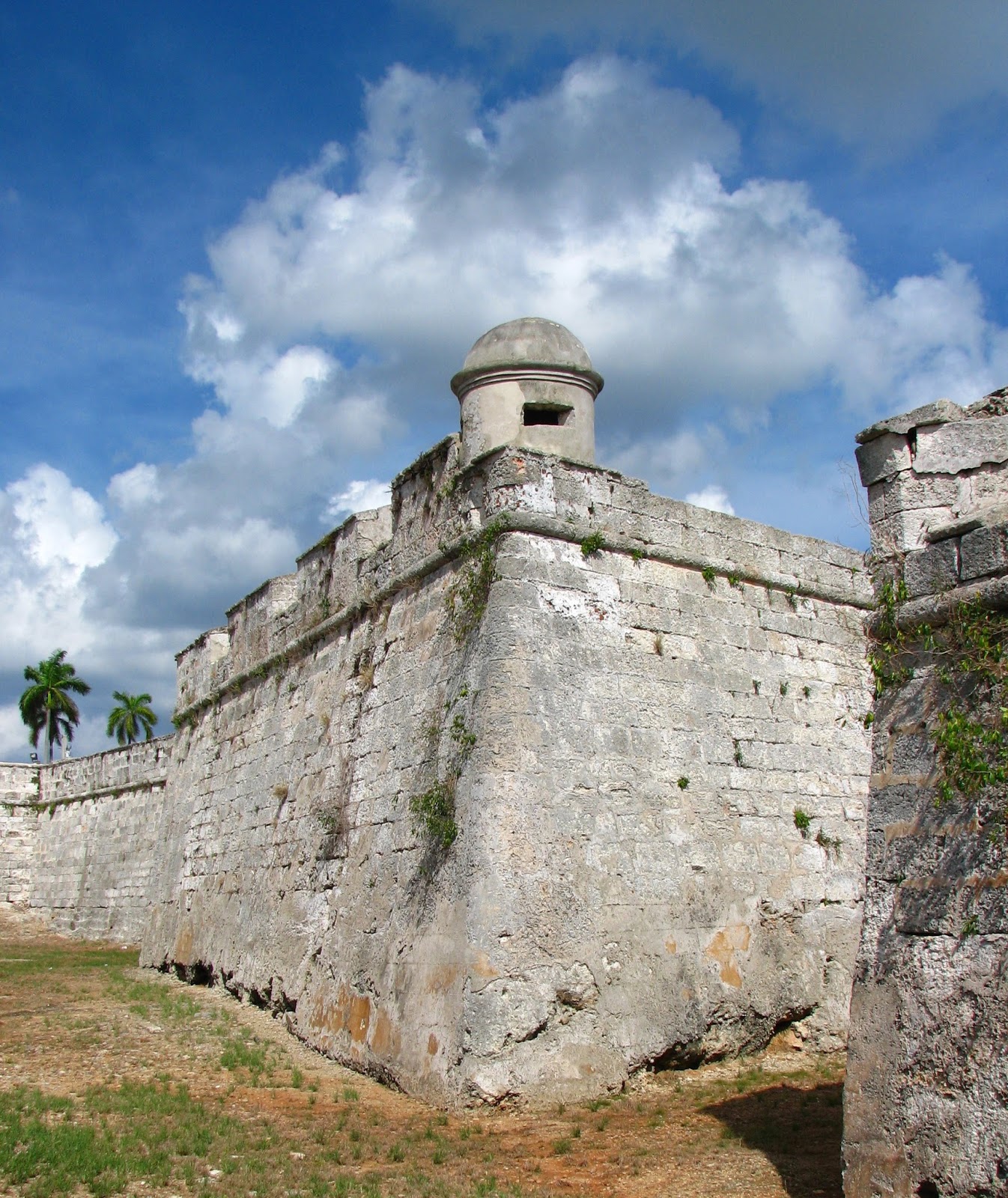
This Guide offers a brief history of the Spanish colonial fort of San Severino, localized in the bay of Matanzas, northern coast of Cuba. We designed it with the visitor in mind. It is organized by chapters, each providing a very brief account of the most prominent locations of the fort. Describing the areas as the visitor will reach them along the modern tourist paths. Many of the chapters include new information gleaned from our current research on the history and archaeology of the Castillo.

Our main wish was to inform and guide the potential visitors, off and on the island. In addition, to provide the townspeople of Matanzas and the Slave Route’s Museum-today part of the Castillo de San Severino-with a freely available Guide for all interested. The new Visitor’s Guide is available for free download here.

It is our great hope that this Castillo can become a point of interest for tourists interested in Cuba’s colonial past. Moreover, that its visits can help provide for its maintenance and permanence, wishfully, for more centuries to come. Feel free to peruse my other posts on this magical spot on Matanzas, either here, on San Carlos de Matanzas blog, or our Progressus blog page, on where we will be publishing parts of the Guide.

Next year, the Castillo will celebrate its 325 years!